A growing body of scientific research is challenging one of the most widely accepted climate solutions: planting more trees. While afforestation has long been promoted as a way to combat desertification and absorb carbon dioxide, new findings from China suggest that large-scale tree planting can also disrupt water systems—sometimes with unintended and serious consequences.
In northern China, vast shelterbelts planted over decades to halt the advance of the Gobi Desert have become emblematic of human determination to reshape landscapes. Since the late 1970s, the country has added over 100,000 square miles of forest cover, raising national forest coverage from about 10% in 1949 to nearly 25% today. This massive effort, known as the Three-North Shelterbelt Program or the “Great Green Wall of China,” has helped reduce dust storms and stabilize soils across vulnerable regions.
However, a recent peer-reviewed study published in Earth’s Future reveals a more complex reality beneath the greener surface. Researchers from China Agricultural University, Tianjin University, and Utrecht University found that this large-scale regreening has significantly altered China’s water cycle.
Using satellite data and hydrological models covering the period from 2001 to 2020, the study shows that increased vegetation has led to higher rates of evapotranspiration—the process by which water evaporates from land and transpires from plants into the atmosphere. While precipitation also rose slightly, it did not compensate for the increased water loss. As a result, overall water availability declined across large parts of the country.
The changes are not uniform. Approximately 74% of China’s territory—including both the humid eastern monsoon regions and the already water-stressed northwest—experienced reduced water availability. Meanwhile, the Tibetan Plateau saw an increase in freshwater, indicating that moisture was not lost entirely but redistributed geographically. In effect, water was shifted away from areas where it was already scarce, including agricultural zones and densely populated regions.
Scientists describe trees in these systems as functioning like “biological pumps.” Deep-rooted species draw water from the soil and release it into the atmosphere, where it can travel long distances before falling as rain. While this process can cool local climates and support rainfall elsewhere, it can also deplete groundwater reserves in the regions where trees are planted.
For communities on the ground, these shifts are tangible. Farmers report wells running dry more frequently, increased reliance on irrigation, and rising energy costs as pumps operate longer. In some areas, the visual success of greening efforts—captured in satellite imagery—masks a worsening water crisis below the surface.
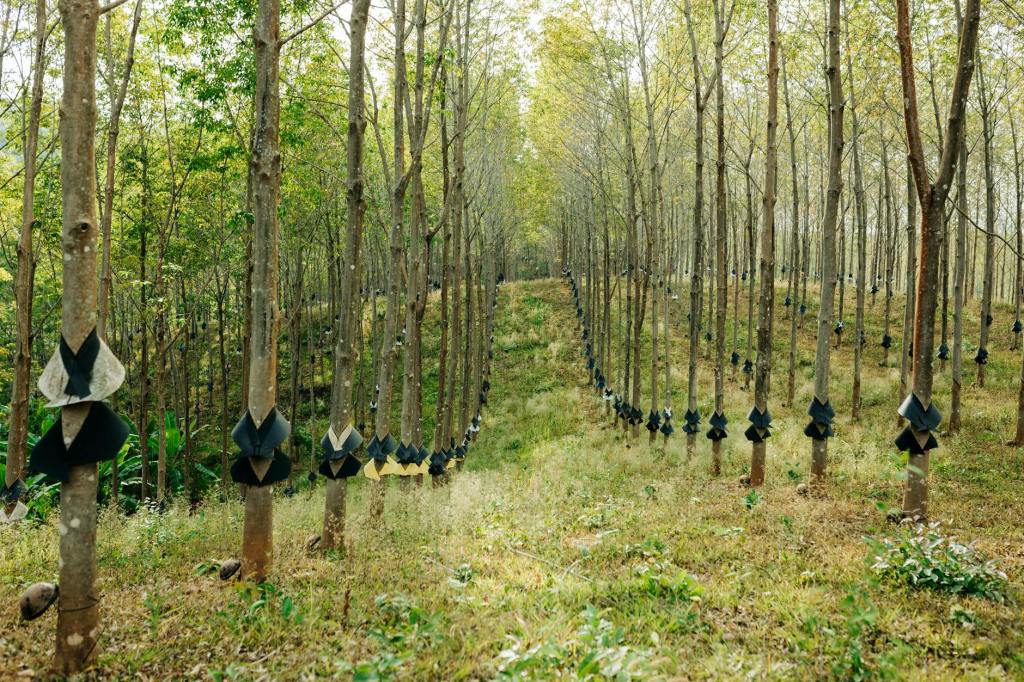
A key factor behind these outcomes is the type of vegetation used. In many parts of northern China, fast-growing and water-intensive species such as poplars were planted in dense rows to quickly establish shelterbelts. While effective in stabilizing sand and blocking wind, these monoculture plantations often consume large amounts of water and can alter soil moisture dynamics over time.
Ecologists have raised concerns that such approaches may be ill-suited to arid and semi-arid environments. Grasslands and shrublands, which are naturally adapted to low-water conditions, are sometimes replaced with tree plantations that demand more water than the ecosystem can sustainably provide. In these cases, efforts to “green” the land can paradoxically lead to long-term drying and ecological stress.
The findings from China are increasingly influencing global conversations about land restoration, particularly in regions facing similar challenges. In Africa, for example, the Great Green Wall initiative—launched by the African Union in 2007 to combat desertification across the Sahel—has evolved significantly over time.
A growing body of scientific research is challenging one of the most widely accepted climate solutions: planting more trees. While afforestation has long been promoted as a way to combat desertification and absorb carbon dioxide, new findings from China suggest that large-scale tree planting can also disrupt water systems—sometimes with unintended and serious consequences.
In northern China, vast shelterbelts planted over decades to halt the advance of the Gobi Desert have become emblematic of human determination to reshape landscapes. Since the late 1970s, the country has added over 100,000 square miles of forest cover, raising national forest coverage from about 10% in 1949 to nearly 25% today. This massive effort, known as the Three-North Shelterbelt Program or the “Great Green Wall of China,” has helped reduce dust storms and stabilize soils across vulnerable regions.
However, a recent peer-reviewed study published in Earth’s Future reveals a more complex reality beneath the greener surface. Researchers from China Agricultural University, Tianjin University, and Utrecht University found that this large-scale regreening has significantly altered China’s water cycle.
Using satellite data and hydrological models covering the period from 2001 to 2020, the study shows that increased vegetation has led to higher rates of evapotranspiration—the process by which water evaporates from land and transpires from plants into the atmosphere. While precipitation also rose slightly, it did not compensate for the increased water loss. As a result, overall water availability declined across large parts of the country.
The changes are not uniform. Approximately 74% of China’s territory—including both the humid eastern monsoon regions and the already water-stressed northwest—experienced reduced water availability. Meanwhile, the Tibetan Plateau saw an increase in freshwater, indicating that moisture was not lost entirely but redistributed geographically. In effect, water was shifted away from areas where it was already scarce, including agricultural zones and densely populated regions.
Scientists describe trees in these systems as functioning like “biological pumps.” Deep-rooted species draw water from the soil and release it into the atmosphere, where it can travel long distances before falling as rain. While this process can cool local climates and support rainfall elsewhere, it can also deplete groundwater reserves in the regions where trees are planted.
For communities on the ground, these shifts are tangible. Farmers report wells running dry more frequently, increased reliance on irrigation, and rising energy costs as pumps operate longer. In some areas, the visual success of greening efforts—captured in satellite imagery—masks a worsening water crisis below the surface.
A key factor behind these outcomes is the type of vegetation used. In many parts of northern China, fast-growing and water-intensive species such as poplars were planted in dense rows to quickly establish shelterbelts. While effective in stabilizing sand and blocking wind, these monoculture plantations often consume large amounts of water and can alter soil moisture dynamics over time.
Ecologists have raised concerns that such approaches may be ill-suited to arid and semi-arid environments. Grasslands and shrublands, which are naturally adapted to low-water conditions, are sometimes replaced with tree plantations that demand more water than the ecosystem can sustainably provide. In these cases, efforts to “green” the land can paradoxically lead to long-term drying and ecological stress.
The findings from China are increasingly influencing global conversations about land restoration, particularly in regions facing similar challenges. In Africa, for example, the Great Green Wall initiative—launched by the African Union in 2007 to combat desertification across the Sahel—has evolved significantly over time.




 PARYAWARAN
Leave a comment