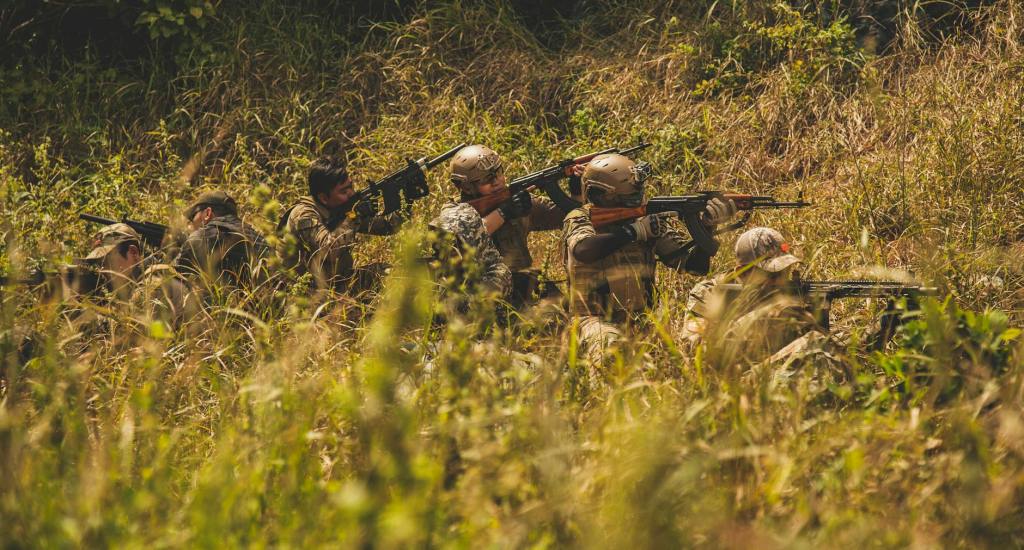
A new global analysis has revealed that armed conflict is a far more significant threat to wildlife than previously recognized, urging conservation bodies to rethink how species risk is assessed and managed.
Published in Conservation Letters in May 2021, the study highlights that more than 70 percent of the world’s terrestrial mammal and bird species had some overlap with conflict zones between 1989 and 2018. Within this already alarming figure, at least 615 species experienced both widespread and prolonged exposure to conflict, meaning that over half of their geographic range was affected for 15 years or more.
Despite this, the IUCN Red List currently identifies only 107 species as being threatened by “war, civil unrest, and military exercises.” The study argues that this discrepancy points to a major underestimation of conflict as a driver of biodiversity loss.
Conducted by researchers affiliated with organizations including Wildlife Conservation Society, Nature Conservation Foundation, Indian Institute of Science, and Panthera, the research underscores the need to formally incorporate conflict exposure into conservation planning.
The impacts of armed conflict on wildlife are both direct and indirect, but the study finds that indirect effects are often more damaging. Direct consequences include deaths caused by landmines, shelling, and opportunistic hunting by armed groups. However, the breakdown of governance and conservation systems during conflicts has longer-lasting repercussions.
Protected areas frequently lose enforcement as rangers withdraw or are unable to patrol. Displaced communities may move into forested or protected habitats, increasing pressure on natural resources. Deforestation accelerates as people seek fuel and shelter, while illegal activities such as poaching and timber extraction flourish in the absence of oversight.
The study notes that threats like hunting, agricultural expansion, pollution, and natural resource extraction are significantly more pronounced in conflict-affected regions compared to stable areas. In contrast, factors such as climate change and invasive species do not show a similar increase, suggesting that conflict primarily amplifies existing human pressures rather than introducing entirely new ones.
The findings are particularly concerning for already threatened species. Among mammals and birds classified as at risk of extinction, conflict overlapped with the ranges of 86 percent and 95 percent respectively, where populations were already declining. By comparison, species without conflict exposure showed much lower rates of decline, ranging between 16 and 42 percent.
Real-world examples illustrate this pattern. In Angola, decades of civil war from 1975 to 2002 led to the collapse of wildlife populations, including lions, elephants, and antelope. Although some species have begun to recover, rebuilding ecosystems remains a slow and uncertain process.
Similarly, Manas National Park in India experienced severe biodiversity losses during years of insurgency beginning in the late 1980s. Iconic species such as tigers and rhinos declined sharply, and the park was listed as a World Heritage site in danger for nearly two decades. Conservation efforts following a ceasefire in 2003 have helped reintroduce species like the one-horned rhinoceros, but recovery has been gradual and fragile.
These cases, the study suggests, are not exceptions but representative of a broader global trend: wildlife populations tend to collapse during periods of conflict and recover slowly afterward, if at all.
To address this challenge, the authors recommend several changes to conservation strategies. They call for the International Union for Conservation of Nature to explicitly recognize conflict exposure in species risk assessments, bridging the gap between the currently listed 107 species and the 615 identified in the study.
They also emphasize the importance of proactive planning. For species entirely confined to conflict zones, captive breeding and reintroduction programs may be necessary. For others, conservation efforts should focus on protecting populations in stable regions to support recovery once conflicts subside.
More broadly, the study argues that armed conflict should be treated as a predictable and recurring threat rather than an unforeseen crisis. Integrating conflict resilience into conservation planning could help safeguard vulnerable species against future disruptions.
As global biodiversity continues to decline under the pressures of habitat loss and climate change, the study positions armed conflict as a critical but underrecognized “threat multiplier.” Addressing it directly, rather than as a secondary concern, may be essential to preventing further irreversible losses in the natural world.

 PARYAWARAN
Leave a comment