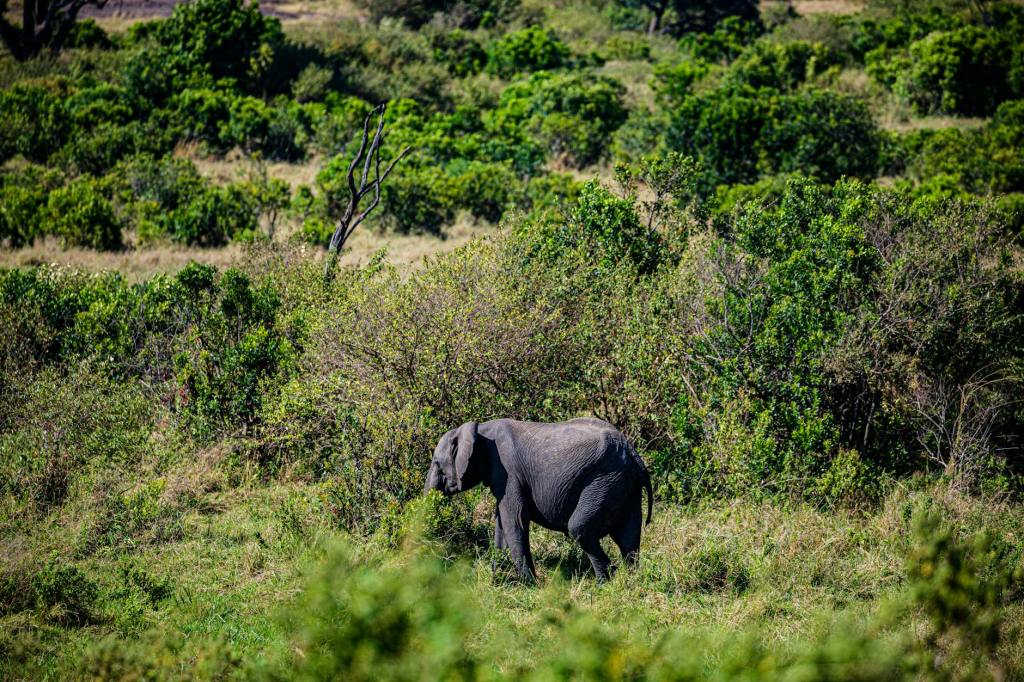
In a rare ecological event, two wild elephants ventured into the buffer zone of Tadoba-Andhari Tiger Reserve (TATR) in late May, marking the second such sighting in less than two years in this tiger-dominated landscape. The elephants, tracked from Gadchiroli district into Chandrapur’s forested fringes, were monitored by forest staff using night patrols and drones to prevent conflicts with nearby villages. While they eventually moved on without major incident, their presence has sparked urgent questions about how this already strained ecosystem will adapt to a new megafaunal species.
An Unprecedented Shift
Chandrapur, home to over 250 tigers—one of India’s highest densities—is no stranger to human-wildlife conflict. However, elephants have not roamed these forests in years. Their arrival signals a potential range expansion, possibly driven by habitat changes in neighboring regions.
In October 2023, another elephant crossed into Chandrapur’s Bramhapuri division from Gadchiroli but died from electrocution—Maharashtra’s first such fatality in over a century. These incidents suggest a trend: elephants are exploring new territories, and Chandrapur is on the frontline of this shift.
A Landscape Already Under Pressure
The district’s forests are already a hotspot for human-tiger conflicts, with over 300 attacks reported in recent years. Villagers, though culturally reverent to tigers as incarnations of the Waghoba deity, increasingly resent the predators for encroaching on farmlands and threatening lives.
Now, elephants—social, wide-ranging, and capable of transforming landscapes—add a new layer of complexity. Unlike tigers, which avoid humans, elephants follow food and water, often trampling crops, breaking fences, and damaging infrastructure. Their unpredictable movements make them harder to manage, and their sheer size escalates risks.
The Need for a New Strategy
Coexisting with elephants demands tailored approaches. States like Tamil Nadu, Kerala, and Odisha—where human-elephant interactions are common—use early warning systems, watchtowers, and rapid response teams. Maharashtra must adapt quickly, implementing spatial planning for elephant corridors, real-time monitoring, and community training.
A critical challenge is Chandrapur’s forest-dependent communities. Villagers routinely access forests for firewood, farming, and travel—exposing them to unexpected elephant encounters. Without historical familiarity, fear could fuel reactive measures, worsening conflicts.
Preparing for the Next Arrival
For now, the elephants have left Chandrapur. But their brief stay underscores an urgent need for preparedness. Forest officials must collaborate with experts to design elephant-specific conflict mitigation, while ensuring local communities are informed and involved.
As ecological shifts reshape wildlife distributions, Chandrapur’s experience could be a precursor for other regions. The question remains: Can a landscape strained by tiger conflicts accommodate another giant? The answer will depend on proactive policy, community engagement, and swift adaptation. The next elephant movement may come sooner than expected—and Chandrapur must be ready.



 PARYAWARAN
Leave a comment