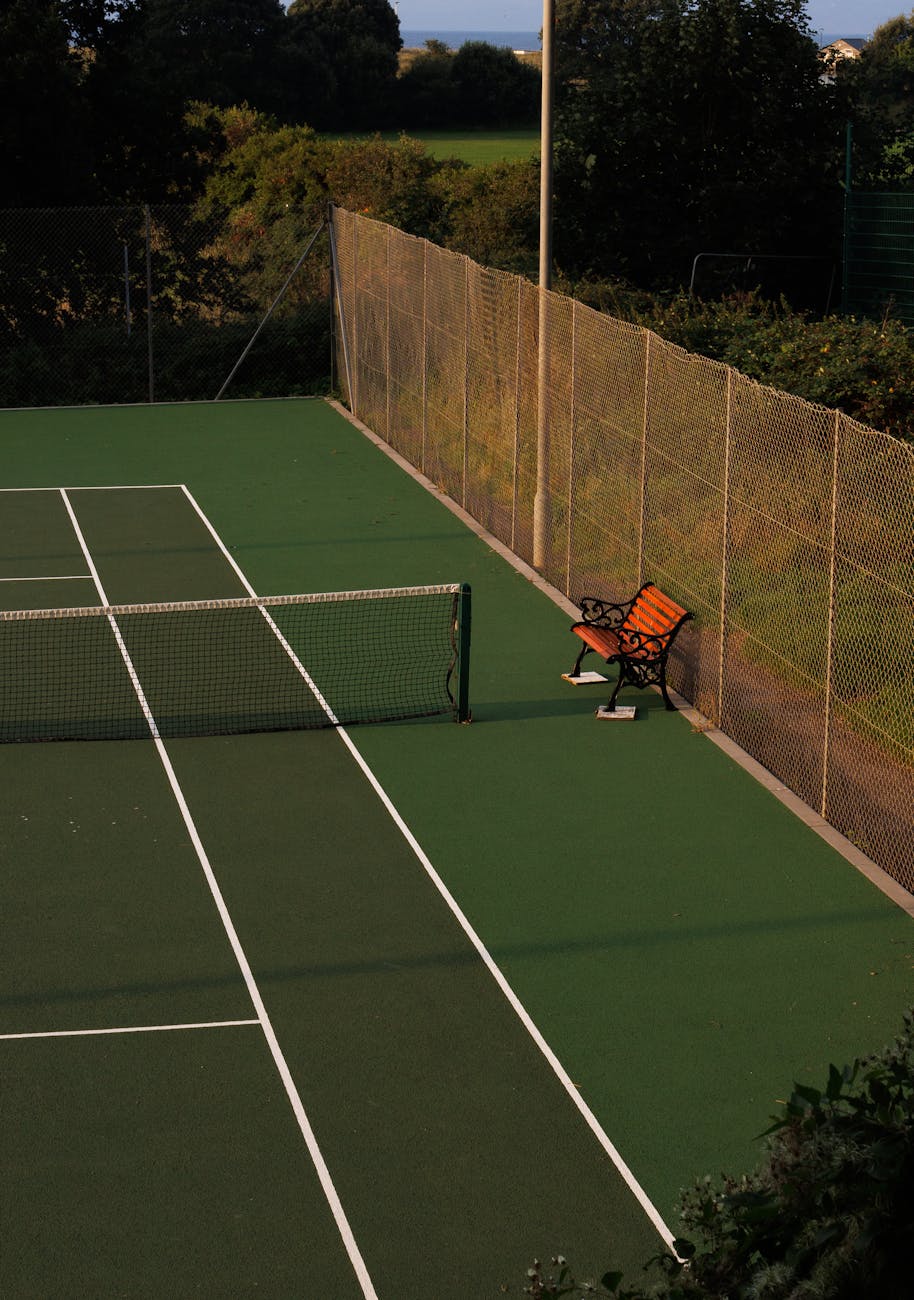
In an unexpected convergence of sports infrastructure and environmental science, green clay tennis courts are being recognized as a promising tool in the fight against climate change. A recent study published in Applied Geochemistry highlights how these courts can actively capture carbon dioxide through a natural geological process known as rock weathering.
Traditionally valued for their playing characteristics, green clay courts are now gaining attention for their environmental benefits. The innovation lies in their composition. These courts are typically made from silicate-rich materials such as basalt or metabasalt, which have the ability to chemically react with rainwater. Through this reaction, atmospheric carbon dioxide is absorbed and converted into stable carbon compounds that remain trapped in the soil.
This process transforms an ordinary sports surface into a functional carbon sink. Unlike conventional hard courts made of concrete or asphalt, which contribute to emissions during their lifecycle, green clay courts offer a dual advantage: they reduce emissions and actively remove carbon from the atmosphere.
The study examined more than 17,000 such courts across the United States, analyzing their full lifecycle impact. This included emissions generated during material extraction, transportation, construction, and maintenance. Researchers also assessed environmental variables such as temperature, mineral grain size, and chemical composition to determine their influence on carbon capture efficiency.
The findings reveal that these courts collectively remove approximately 25,000 metric tons of carbon dioxide each year. This positions them as a significantly more sustainable alternative to traditional tennis surfaces. Importantly, the study indicates that a large majority of these courts achieve carbon neutrality within a relatively short timeframe. Around 80 percent reach net-zero emissions in under a decade, while over 90 percent do so within 20 years.
Even more striking is the speed at which many courts begin to generate net environmental benefits. On average, green clay courts reach a carbon-negative state in just three and a half years. This means they start capturing more carbon than they emit within a short operational period, marking a notable shift in how infrastructure can contribute to climate mitigation.
However, the effectiveness of these courts is not uniform across all regions. Geographic and climatic factors play a significant role. Courts located in warmer climates tend to show higher carbon capture rates due to increased chemical reaction speeds. Similarly, proximity to basalt processing facilities reduces transportation-related emissions, further improving overall efficiency. In contrast, courts in colder regions may take longer to achieve carbon neutrality, and in some cases may not reach it at all.
Beyond carbon capture, green clay courts offer additional environmental advantages. Their construction typically results in lower initial emissions compared to concrete-based surfaces, reducing the environmental footprint by up to three times. This makes them an attractive option not only for new developments but also for upgrading existing sports facilities.
Moreover, the integration of carbon capture into everyday infrastructure represents a broader shift in climate strategy. Instead of relying solely on large-scale energy transitions or industrial solutions, this approach demonstrates how smaller, decentralized interventions can collectively make a meaningful impact. By embedding sustainability into commonly used spaces, such as sports courts, the potential reach of climate solutions expands significantly.
The concept also aligns with ongoing efforts in agriculture and coastal management, where similar rock weathering techniques have been applied to enhance carbon sequestration. The success of green clay courts reinforces the versatility of this method and suggests that it could be adapted for other urban and recreational environments.
Looking ahead, further improvements in material composition and maintenance practices could enhance the carbon capture capacity of these courts. As demand for sustainable infrastructure grows, such innovations may play an increasingly important role in urban planning and design.
Ultimately, the emergence of green clay tennis courts as carbon sinks underscores a powerful idea: climate solutions do not always require complex or large-scale interventions. Sometimes, they can be found in the most familiar places—quietly working beneath the surface, transforming everyday activities into opportunities for environmental stewardship.



 PARYAWARAN
Leave a comment