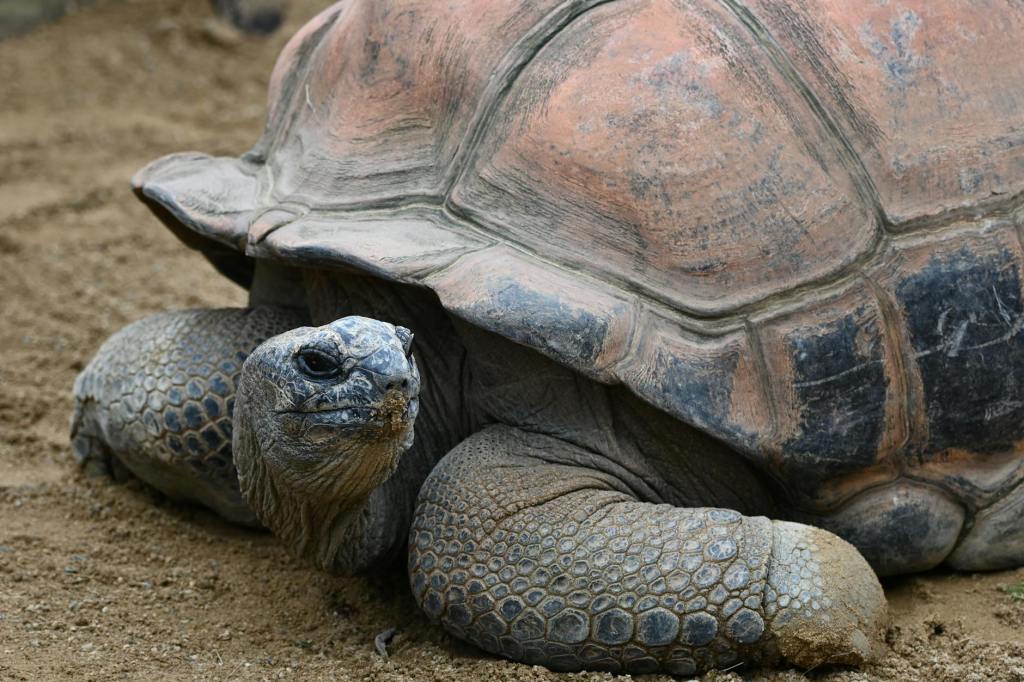
In the forested hills of Nagaland, a rare conservation success is unfolding as communities once known for hunting the Asian giant tortoise are now leading efforts to restore the species to the wild. The initiative, implemented by the Turtle Survival Alliance Foundation India in collaboration with the Nagaland Forest Department under the India Turtle Conservation Programme, is helping revive one of Asia’s most threatened reptiles through community stewardship and captive breeding.
The Asian giant tortoise, scientifically known as Manouria emys phayrei, is the largest living tortoise in mainland Asia. Once commonly seen in the forests of Northeast India, the species has suffered severe population declines due to habitat destruction, hunting, and illegal trade for meat and pets. Conservationists estimate that only a few hundred mature individuals may survive globally in fragmented habitats across South and Southeast Asia.
In Nagaland, the species had nearly vanished from many forests within a few decades. Elders from the region recall a time when giant tortoises were frequently encountered in the dense undergrowth of the state’s semi-evergreen forests. Today, however, sightings are extremely rare, making the recent reintroduction effort especially significant.
The recovery initiative began in 2018 with the establishment of a captive-breeding centre at the Nagaland Zoological Park. The programme started with 13 tortoises rescued from village households and local meat markets. Many of these animals had been kept as pets or were destined for consumption. Over the years, the facility has grown into the world’s largest assurance colony of Asian giant tortoises, now housing more than 100 individuals.
In a landmark step toward species recovery, 10 captive-bred juvenile tortoises were released into the Old Jalukie Community Reserve, a community-managed reserve in Nagaland’s Peren district. Unlike conventional reintroduction efforts conducted within state-run protected areas, the project deliberately chose a community reserve, recognizing the crucial role local residents play in safeguarding forests and wildlife.
Before their release, the tortoises were acclimatized inside a bamboo enclosure within the reserve. After months of monitoring, the animals were released into a 370-hectare landscape of hilly forests rich in native vegetation, including oak, Nepalese alder, Indian chestnut, and other indigenous species. Early monitoring suggests that all radio-tagged tortoises are surviving and adapting well to the wild.
A central feature of the initiative is the involvement of local youth, now referred to as “Tortoise Guardians.” Trained by conservationists and forest officials, these community members conduct daily monitoring of the released tortoises using radio telemetry and GPS tracking. They record movements, feeding behavior, resting sites, and habitat use while patrolling the reserve.
The conservation model is especially important in Nagaland, where nearly 88 percent of forests are owned and managed by communities, clans, and village institutions rather than the government. The state also has one of the highest numbers of community reserves in India, many protected under traditional customary laws.
Conservationists believe this community-based approach is critical for the long-term survival of the species. Previous reintroduction attempts in more conventional protected areas faced setbacks, including predation and poor post-release survival. In contrast, local participation in the current initiative has created stronger protection on the ground and fostered a growing sense of responsibility among younger generations.
The Asian giant tortoise also plays an important ecological role in forest ecosystems. Weighing up to 37 kilograms, the reptiles are often described as “small elephants of the forest” because their movements through dense vegetation help disperse seeds and support forest regeneration. The species is also notable for its unusual nesting behavior, building elevated nests from leaf litter and plant material rather than digging into the ground like most tortoises.
Encouraged by the success in Nagaland, similar conservation efforts are now being expanded into neighboring Manipur. A captive-breeding programme established at the Manipur Zoological Garden has already produced hatchlings through artificial incubation, raising hopes for future reintroductions across the tortoise’s historic range in Northeast India.
The programme is increasingly being viewed as a model for species recovery through community participation. Beyond protecting a critically endangered reptile, it is also helping transform attitudes toward wildlife conservation in the region. Communities that once hunted the tortoises are now emerging as their strongest protectors, demonstrating how traditional stewardship and modern conservation science can work together to restore species on the brink of extinction.

 PARYAWARAN
Leave a comment