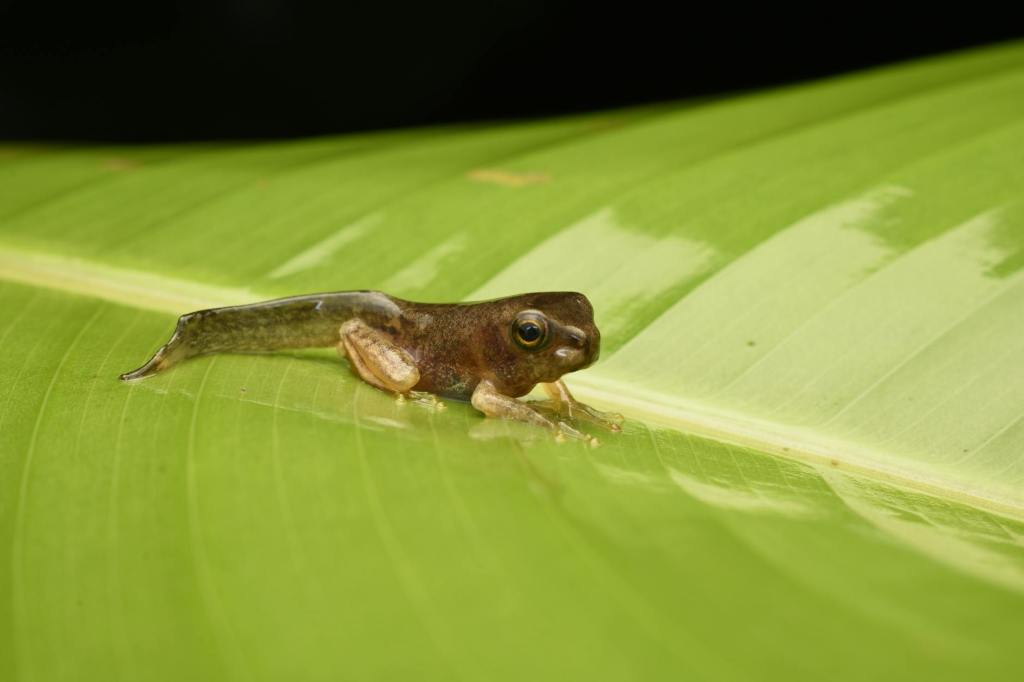
Researchers have detected microplastics in frog tadpoles and their freshwater habitats in the Amazon Rainforest for the first time, highlighting the growing spread of plastic pollution into some of the world’s most biodiverse ecosystems. The findings have raised concerns among scientists and conservationists about the potential impacts of microplastics on amphibians and freshwater ecosystems already under environmental stress.
The study, published in the journal Scientific Reports, was conducted by researchers from the Federal University of Pará in Brazil. The research focused on temporary rain-fed ponds located within Gunma Ecological Park in Pará state, an area considered relatively well preserved and sparsely populated.
Scientists collected water samples from five natural ponds that serve as important breeding and larval development sites for frogs in the Amazon. They also examined 500 tadpoles of the Venezuela snouted treefrog, a species commonly found in forests and urban areas across South America.
The results revealed microplastic contamination in every pond and every tadpole sampled during the study. Most of the particles identified were transparent, blue, and black synthetic fibres composed largely of polyester-based plastics. Researchers believe these fibres may originate from sources such as untreated sewage, fishing activities, atmospheric deposition, and the breakdown of plastic waste.
The findings add to growing evidence that microplastic pollution has become widespread across the Amazon Basin. Previous studies had already detected microplastics in fish, aquatic invertebrates, soil, and river water throughout the region. However, this marks the first confirmed evidence of contamination in wild amphibian tadpoles in the Amazon.
Researchers expressed particular concern because amphibians are considered among the world’s most threatened vertebrates and are highly sensitive to environmental changes. Tadpoles spend their early life stages entirely in water, making them especially vulnerable to pollutants present in freshwater ecosystems.
According to the study, tadpoles likely ingested the microplastics while feeding on algae, fungi, eggs, and organic matter suspended in pond water. Scientists warned that ingestion of plastic particles could cause physiological stress, genetic damage, developmental abnormalities, and changes in blood cells and tissues.
The study also suggested that smaller and earlier-stage tadpoles showed higher concentrations of microplastics compared to larger individuals, indicating that younger amphibians may face greater exposure risks during critical developmental stages.
Environmental experts say the discovery is particularly alarming because it occurred in an area with relatively low human population density. The presence of microplastics in remote rainforest ecosystems suggests that plastic pollution is travelling far beyond cities and industrial centres through waterways, atmospheric transport, and human activities.
Freshwater contamination by microplastics remains less studied globally compared to marine pollution. Scientists say freshwater ecosystems such as rivers, wetlands, ponds, and streams may serve as important pathways through which plastic particles move into food webs and terrestrial environments.
The Amazon Rainforest plays a critical role in regulating global climate, supporting freshwater systems, and maintaining biodiversity. Researchers warn that increasing plastic contamination could create additional stress on amphibians already threatened by habitat destruction, climate change, disease outbreaks, and pollution.
Amphibians are widely considered ecological indicators because of their sensitivity to environmental disturbances. Declines in amphibian populations often signal broader ecosystem problems affecting water quality and biodiversity health.
The study’s authors stressed the importance of continued monitoring of microplastic contamination across Amazonian ecosystems to better understand how pollution is affecting wildlife and ecological processes. They also called for stronger waste management systems, improved sewage treatment, and greater efforts to reduce plastic pollution entering freshwater habitats.
Conservationists say the findings underscore the growing global reach of microplastics, which have now been detected in oceans, rivers, soils, wildlife, human tissues, and even remote forests previously considered relatively untouched.
As research on microplastic pollution expands, scientists warn that understanding its long-term impacts on biodiversity and ecosystem health will become increasingly important for conservation planning, especially in ecologically sensitive regions such as the Amazon Rainforest.


 PARYAWARAN
Leave a comment