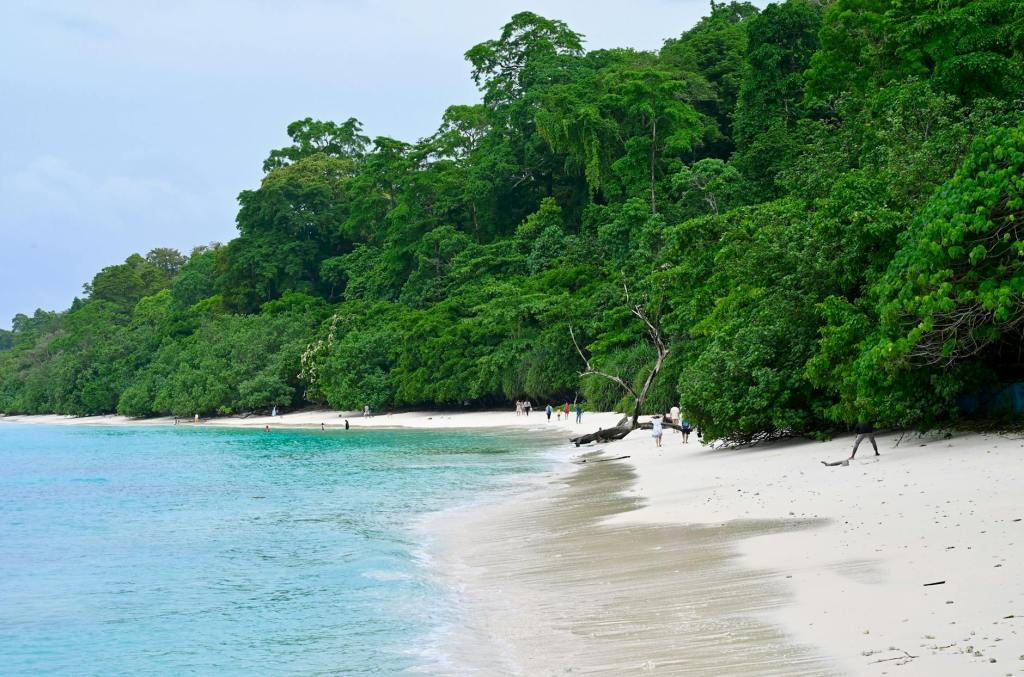
The remote and ecologically fragile Andaman and Nicobar Islands have become the center of an intense national debate over conservation and development. While the Indian government views the islands as strategically important for tourism, trade, and national security, environmentalists and indigenous rights activists warn that rapid infrastructure expansion could irreversibly damage one of the world’s richest island ecosystems.
Stretching across the Bay of Bengal, the Andaman and Nicobar archipelago comprises more than 570 islands, many of them covered in dense tropical forests, mangroves, and coral reefs. The islands are home to unique biodiversity, including endemic bird species, marine turtles, saltwater crocodiles, dugongs, and vibrant coral ecosystems. Several indigenous tribes — including the Jarawa, Onge, Shompen, Sentinelese, and Nicobarese — also inhabit the islands, many of whom maintain limited contact with the outside world.
In recent years, however, large-scale development proposals have transformed the islands into a flashpoint between economic ambitions and ecological preservation.
At the heart of the controversy is the Indian government’s ambitious mega-development plan for Great Nicobar Island, the southernmost island in the archipelago. The project includes a transshipment port at Galathea Bay, an international airport, a township, and a power plant. Officials argue that the project could turn Great Nicobar into a major maritime and economic hub due to its proximity to the Malacca Strait, one of the world’s busiest shipping routes.
Government agencies have described the project as essential for strengthening India’s strategic presence in the Indo-Pacific region, especially amid growing geopolitical competition in the Indian Ocean. Supporters also claim that tourism and infrastructure projects will create employment opportunities and improve connectivity for island residents.
But critics say the environmental cost could be devastating.
Environmental groups have warned that the proposed development threatens pristine rainforests and critical wildlife habitats. The Galathea Bay area, where the port is proposed, is one of the most important nesting grounds for the endangered giant leatherback turtle. Scientists fear dredging, construction, shipping traffic, and pollution could severely disrupt marine ecosystems.
The project also involves the diversion of thousands of hectares of forest land, including areas classified as primary tropical rainforest. Conservationists argue that such forests are irreplaceable carbon sinks and biodiversity hotspots. Experts have repeatedly cautioned that island ecosystems are particularly vulnerable because they evolve in isolation and recover slowly from disturbance.
The controversy intensified after reports revealed that environmental clearances for the Great Nicobar project were granted despite concerns raised by scientific bodies and independent experts. Critics accused authorities of rushing approvals without adequately studying long-term ecological impacts, seismic risks, and disaster vulnerability.
The islands lie in one of the world’s most active seismic zones and were among the worst affected regions during the 2004 Indian Ocean tsunami. Environmentalists argue that large-scale construction in such a fragile zone could increase risks during future earthquakes and cyclones.
Indigenous rights have become another major concern.
Anthropologists and tribal rights activists say development could threaten the survival of indigenous communities that have lived in the islands for thousands of years. The proposed project area overlaps with the habitat of the Shompen tribe, a Particularly Vulnerable Tribal Group living in the forests of Great Nicobar. Activists fear that roads, migration, and outside interference could disrupt traditional lifestyles and expose isolated communities to diseases and exploitation.
The debate also revives long-standing concerns about development in ecologically sensitive island territories. Over the decades, roads, tourism, logging, and population expansion have already altered parts of the Andaman Islands. The Andaman Trunk Road, which cuts through the Jarawa Tribal Reserve, has repeatedly drawn criticism for exposing the Jarawa community to outside influence, poaching, and illegal tourism.
Meanwhile, tourism itself remains a contentious issue. The Andaman Islands have witnessed a steady increase in visitors attracted by beaches, coral reefs, and scuba diving. While tourism generates revenue and jobs, conservationists argue that unregulated expansion has led to waste management problems, coral damage, plastic pollution, and pressure on freshwater resources.
Some experts advocate a different development model focused on sustainability rather than mega-projects. They argue that small-scale eco-tourism, renewable energy, community-led conservation, and strict environmental safeguards could balance economic needs with ecological protection.
Climate change adds further urgency to the debate. Rising sea levels, coral bleaching, coastal erosion, and increasingly severe cyclones already threaten the islands’ fragile ecosystems. Scientists warn that large-scale deforestation and coastal modification could worsen environmental instability in the region.
Supporters of the government’s plans counter that India cannot afford to ignore the strategic and economic potential of the islands. They argue that infrastructure development is necessary to improve defense logistics, connectivity, disaster preparedness, and economic growth in a region long considered isolated and underdeveloped.
Officials also maintain that environmental safeguards and compensatory afforestation measures are being incorporated into the projects. However, critics question whether compensatory plantations elsewhere can truly replace ancient tropical forests and delicate coastal ecosystems unique to the Nicobar Islands.
The controversy over the Andaman and Nicobar Islands ultimately reflects a broader challenge facing developing nations: how to pursue economic growth and strategic ambitions without sacrificing ecological integrity and indigenous rights.
As bulldozers prepare to enter some of India’s last untouched island forests, the debate is likely to intensify. For conservationists, the islands represent a globally significant ecological treasure that must be protected with extreme caution. For policymakers, they symbolize an opportunity for economic transformation and geopolitical influence.
The future of the Andaman and Nicobar Islands may therefore depend on whether India can find a path that reconciles development with environmental stewardship — before irreversible damage is done.




 PARYAWARAN
Leave a comment