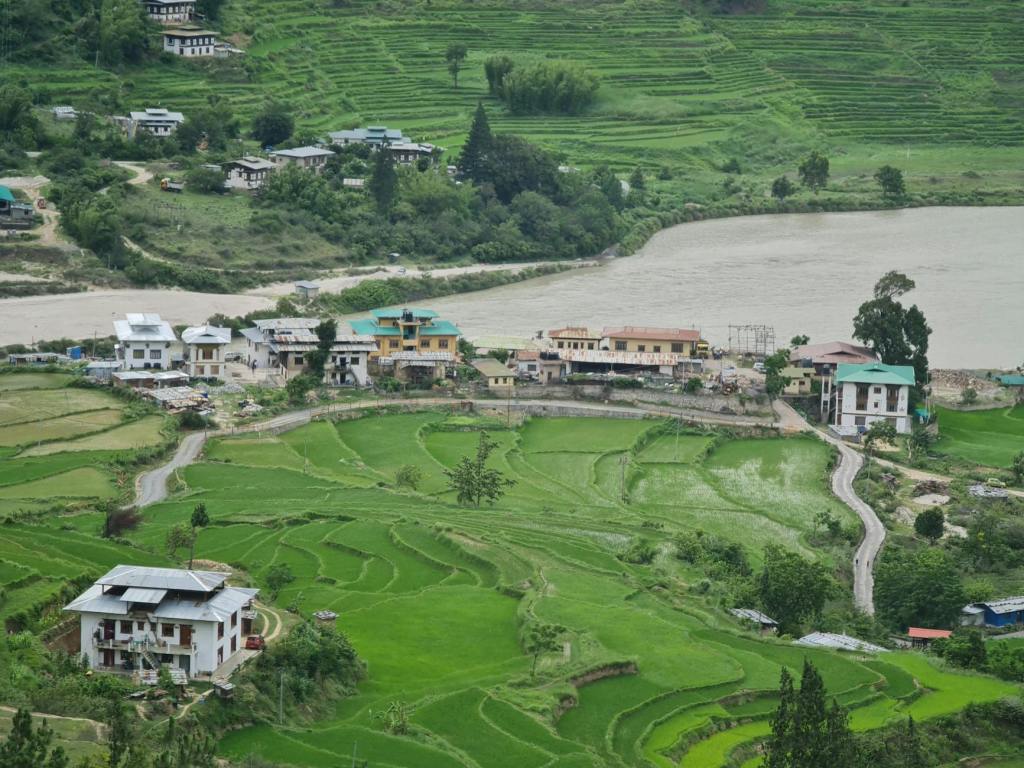
In the remote mountain villages of Bhutan, abandoned homes and shrinking farms are becoming increasingly common as climate change intensifies pressure on rural communities, according to new research examining migration trends across the Himalayan nation.
The study highlights a striking contradiction: although Bhutan is the world’s first carbon-negative country — absorbing far more carbon dioxide than it emits — it remains highly vulnerable to the impacts of global warming. Researchers say climate-related stress is accelerating migration from rural areas, threatening traditional agriculture, community structures, and long-term demographic stability.
Bhutan absorbs an estimated 7.8 million tons of carbon dioxide annually while emitting only around 2.9 million tons, largely due to its extensive forest cover. Nearly 70 percent of the country remains under dense forests, creating a significant carbon sink. The nation also exports clean hydropower energy, helping offset emissions beyond its borders.
Despite its low emissions, Bhutan faces increasing environmental risks linked to climate change. Rapid glacier retreat, unpredictable rainfall, glacial lake outburst floods (GLOFs), landslides, and rising crop-pest infestations are already disrupting rural livelihoods and agricultural production.
The findings, published in the annual journal of Royal Thimphu College, indicate that climate change acts as a “background stressor,” worsening existing economic and social challenges and making life in rural regions increasingly difficult.
Researchers found that 138 out of Bhutan’s 205 regions recorded net population loss, with migration occurring mainly from the rural eastern parts of the country toward more urbanized western areas. International migration has also increased significantly in recent years, particularly among younger and skilled workers seeking education and employment opportunities abroad.
According to the study, climate-driven environmental changes are placing growing strain on Bhutan’s agricultural systems. Erratic rainfall patterns and increasing natural disasters are reducing crop reliability and making traditional farming practices harder to sustain.
As a mountainous country, Bhutan remains particularly vulnerable to climate hazards such as floods and landslides. Researchers noted that unpredictable weather and worsening agricultural conditions are contributing to the gradual “emptying” of rural areas.
The consequences extend beyond population decline. Rural communities are experiencing labor shortages as younger generations move away from farming and village life. Traditional agriculture, which relies heavily on manual labor and intergenerational knowledge, is becoming increasingly difficult to maintain.
The study also warns that aging rural populations are weakening community support systems and reducing social cohesion in many eastern regions of the country.
International migration has become another growing concern. An estimated 67,000 Bhutanese citizens are currently living in Australia — a substantial figure for a country with a population of just over 800,000.
While the migration of skilled workers has raised concerns about “brain drain,” remittances sent home from overseas have become an important source of financial support for rural households. Researchers noted that such income can help families adapt to climate-related challenges and improve resilience.
Field observations conducted during the research revealed how deeply climate variability has affected rural communities. Farmers reported increasingly unpredictable weather conditions and shrinking agricultural labor forces, making cultivation and harvesting more difficult.
Scientists warn that the connection between climate change and migration is likely to intensify as warming continues across the Himalayan region. Bhutan’s glaciers are retreating rapidly, increasing the risks of water shortages and catastrophic flooding in downstream communities.
The research also points to broader concerns about depopulation and abandoned farmland in rural Bhutan. Policymakers are increasingly viewing rural decline as a challenge to building resilient local economies and sustainable futures for mountain communities.
Researchers emphasized the need for economic diversification in rural areas so that migration remains a voluntary choice for better opportunities rather than a necessity for survival.
Bhutan has positioned itself globally as a leader in environmental conservation and climate action. The government continues to invest in biodiversity protection, renewable energy, carbon-trading initiatives, and nature-based solutions aimed at strengthening climate resilience.
Communities across the country are also working to secure water resources and improve protection from climate extremes through local conservation and ecosystem restoration efforts.
The study describes abandoned homes in rural villages as one of the most visible human consequences of climate change in Bhutan. Empty settlements, aging populations, and fallow agricultural lands are increasingly reshaping the social and economic landscape of the country’s mountain regions.
The findings were presented alongside related research from Nepal, India, and Bangladesh at an international science conference held at the Wellcome Collection in London on May 19–20.
The research underscores a broader global reality: countries contributing the least to greenhouse gas emissions are often among the most vulnerable to the escalating impacts of climate change.

 PARYAWARAN
Leave a comment