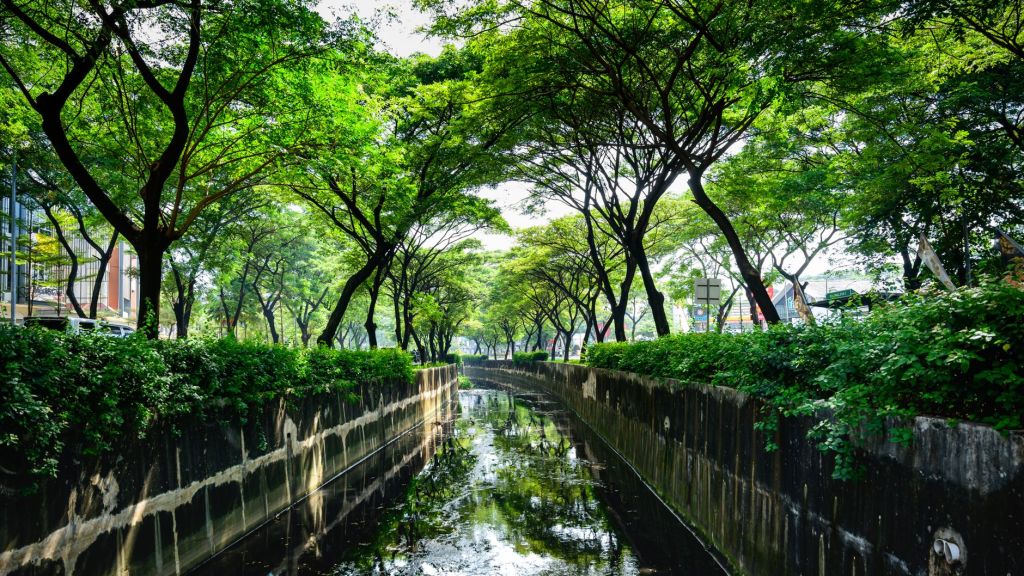
Cities around the world are increasingly turning to “Sponge City” strategies to reduce urban flooding, combining engineered stormwater systems with parks, wetlands and other green infrastructure. But as climate change intensifies rainfall and drought cycles, experts warn these solutions are being pushed to their limits.
The concept gained global attention after a devastating cloudburst struck Copenhagen in 2011. More than five inches of rain fell in a single day, flooding large parts of the Danish capital and causing damages exceeding $1 billion. In response, city authorities launched a long-term transformation of urban infrastructure, redesigning public spaces and introducing systems intended to absorb and manage stormwater more effectively.
Since then, cities from Hong Kong to New York have adopted similar approaches that blend traditional engineering with nature-based solutions. These strategies aim to mimic natural water cycles by allowing rainfall to infiltrate soils, recharge groundwater and reduce runoff during storms.
Urban areas are especially vulnerable to flooding because much of their surface is covered by impermeable materials such as asphalt and concrete. Roads, sidewalks and dense construction prevent water from soaking into the ground, instead directing it rapidly into drainage systems that can quickly become overwhelmed.
Civil engineers note that urban development has fundamentally altered how landscapes manage water. Many drainage networks were designed for historical weather conditions and are increasingly unable to cope with the heavier rainfall events associated with global warming.
In New York City, for example, approximately 60 percent of the sewer system still relies on combined sewer infrastructure where stormwater and wastewater travel through the same pipes. During periods of extreme rainfall, these systems can overflow, sending untreated sewage into surrounding waterways and creating public health and environmental concerns.
To address these risks, American cities have invested billions of dollars into stormwater management projects. Rain gardens, green roofs, constructed wetlands and permeable surfaces are being integrated into urban planning. In Los Angeles, green infrastructure and shallow infiltration basins reportedly captured billions of gallons of water during an atmospheric river event in 2024, demonstrating the potential benefits of these approaches.
However, experts caution that progress remains uneven.
According to researchers and urban planners, many green infrastructure projects in the United States have developed in isolated pockets rather than as coordinated citywide networks. As a result, while individual projects may reduce local flooding, they often fail to provide meaningful protection during extreme weather events.
Retrofitting existing cities also presents major challenges. Transforming dense urban landscapes to include large-scale green infrastructure requires substantial financial investment, long-term planning and coordination across sectors. Some experts argue that countries undergoing rapid urban expansion have more opportunities to integrate sponge city principles from the beginning rather than modifying already-built environments.
China has become a leading example of this approach after promoting Sponge City policies nationwide over the past decade. Yet even large investments do not guarantee protection from unprecedented climate extremes.
In 2021, the city of Zhengzhou experienced record-breaking rainfall that delivered more than a year’s worth of precipitation within days. Despite extensive investments in sponge city infrastructure, the storm overwhelmed urban defenses. Analysts later suggested that few existing systems—green or gray—would have been capable of managing rainfall of that magnitude.
Recent scientific findings suggest the challenge may become more severe in coming decades.
Research published in May indicates that annual rainfall patterns are changing globally, with precipitation becoming increasingly concentrated into shorter, more intense downpours. Such storms can exceed the rate at which soils absorb water, causing runoff and leaving less moisture stored in the ground.
Paradoxically, these heavier bursts may contribute to drier landscapes overall because standing water evaporates more quickly. Extended droughts can further degrade soils by reducing organic matter and, in some cases, making land temporarily water-repellent.
Climate scientists describe this as a difficult balance. Soil that is moderately moist absorbs rainfall efficiently, but conditions that are either too dry or already saturated reduce its ability to function as a natural sponge.
Despite these limitations, researchers emphasize that green infrastructure remains an essential adaptation strategy.
Increasing urban tree cover and vegetated spaces provides multiple benefits beyond flood control, including improved air and water quality, lower urban temperatures, stronger biodiversity and carbon storage. Green spaces also contribute positively to public health and community well-being.
Experts argue that while nature alone cannot eliminate flood risk in an era of more extreme weather, cities covered in vegetation will consistently perform better than landscapes dominated entirely by concrete.
As climate pressures continue to intensify, the future of urban resilience may depend not on choosing between engineered systems and nature—but on integrating both at a scale capable of meeting a changing climate.

 PARYAWARAN
Leave a comment