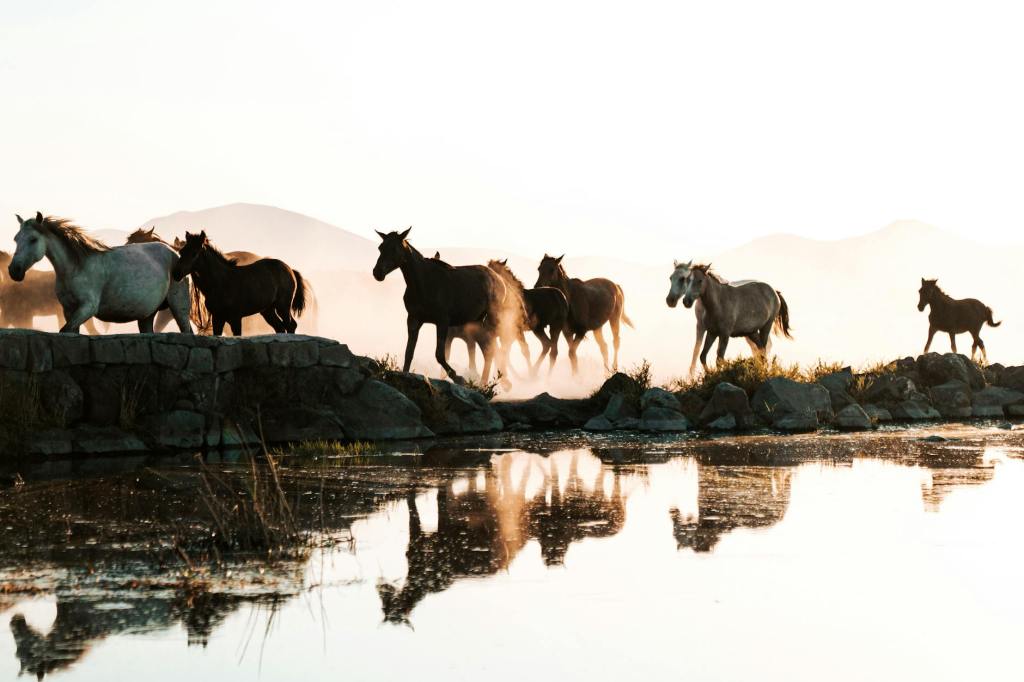
Nearly 40 years after the catastrophic nuclear accident at Chernobyl, the area once synonymous with environmental devastation has become an unexpected sanctuary for wildlife. Scientists have found that populations of large mammals are flourishing within the Chernobyl Exclusion Zone, suggesting that the absence of human activity may be providing greater benefits to wildlife than previously understood.
The findings come from a study published in Proceedings of the Royal Society B, which examined the abundance and diversity of large mammals across northern Ukraine. Researchers discovered that the highly restricted exclusion zone, created after the 1986 nuclear disaster, supports thriving populations of species such as moose, Eurasian lynx, Przewalski’s horses, deer and wild boar.
The disaster occurred on April 26, 1986, when Reactor No. 4 at the Chernobyl Nuclear Power Plant, located about 105 kilometres north of Kyiv, exploded during a safety test. The explosion released vast quantities of radioactive material into the atmosphere, contaminating large areas of Ukraine, Belarus and Russia. More than 100,000 residents were evacuated from nearby towns and villages, and authorities established a roughly 2,600-square-kilometre exclusion zone around the plant. Human access to the region remains tightly controlled due to lingering radioactive contamination.
Although the area was initially viewed as an ecological wasteland, decades of limited human presence have allowed natural ecosystems to recover. To better understand the effects of protection and reduced human disturbance on wildlife, scientists deployed camera traps throughout the exclusion zone as well as in neighboring protected and non-protected landscapes.
The extensive survey recorded a rich diversity of mammal species across the region. Researchers documented 11 large mammal species inhabiting the exclusion zone, with many occurring in substantial numbers. The study revealed that wildlife populations were generally more abundant in the exclusion zone than in surrounding areas where human activities remain more common.
Lead author Svitlana Kudrenko, an ecologist at the University of Freiburg in Germany, explained that the primary factor driving the success of wildlife populations appears to be the strict limitations on human activity. Hunting, road traffic, agriculture and other forms of disturbance are largely absent within the exclusion zone, creating conditions that allow animals to move freely and occupy extensive habitats.
According to the researchers, species such as moose, deer and wild horses utilize not only the exclusion zone itself but also adjacent protected areas, benefiting from a large and connected landscape with minimal human interference. The study found that wildlife occupancy and diversity were highest in regions where protection was strongest and human presence was lowest.
The results provide further evidence that large mammals can rapidly recolonize and thrive in areas where human pressures are reduced. Scientists noted that the exclusion zone effectively functions as one of Europe’s largest protected landscapes, offering refuge to species that often struggle in heavily developed environments.
The research has been described as one of the most comprehensive assessments of large mammal ecology ever conducted in the region. Experts say the findings demonstrate the importance of large, continuous protected areas for maintaining healthy wildlife populations.
Biologist Tim Mousseau of the University of South Carolina, who has spent more than two decades studying ecological conditions around Chernobyl, said the study clearly shows the value of extensive protected landscapes. According to Mousseau, species including wolves, deer, moose and wild horses benefit significantly from reduced hunting pressure and the absence of many human disturbances.
While the study focused on population abundance and habitat use rather than the biological impacts of radiation, scientists acknowledge that radioactive contamination continues to affect some species. Previous research has documented genetic and physiological effects in animals inhabiting the most contaminated parts of the exclusion zone.
One notable study conducted in 2023 examined a population of free-ranging dogs living near the former nuclear power plant. Researchers found evidence that radiation exposure had altered aspects of the animals’ genetic makeup. Many of these dogs are believed to be descendants of pets abandoned when residents were forced to evacuate the area following the accident.
Despite such findings, researchers emphasize that many wildlife populations appear resilient and continue to persist in the region. Kudrenko noted that previous studies have suggested that much of the wildlife living within the exclusion zone does not experience severe population-level impacts from residual radiation.
Although important questions remain regarding the long-term consequences of chronic radiation exposure, the new research highlights a striking ecological reality: wildlife can flourish when human pressures are removed. The Chernobyl Exclusion Zone, created as a result of one of the world’s worst nuclear disasters, has inadvertently become a living laboratory demonstrating nature’s remarkable capacity for recovery when given space and protection.
As conservationists around the world seek solutions to biodiversity decline, the lessons emerging from Chernobyl underscore the importance of preserving large, connected habitats where wildlife can thrive with minimal human disturbance.


 PARYAWARAN
Leave a comment