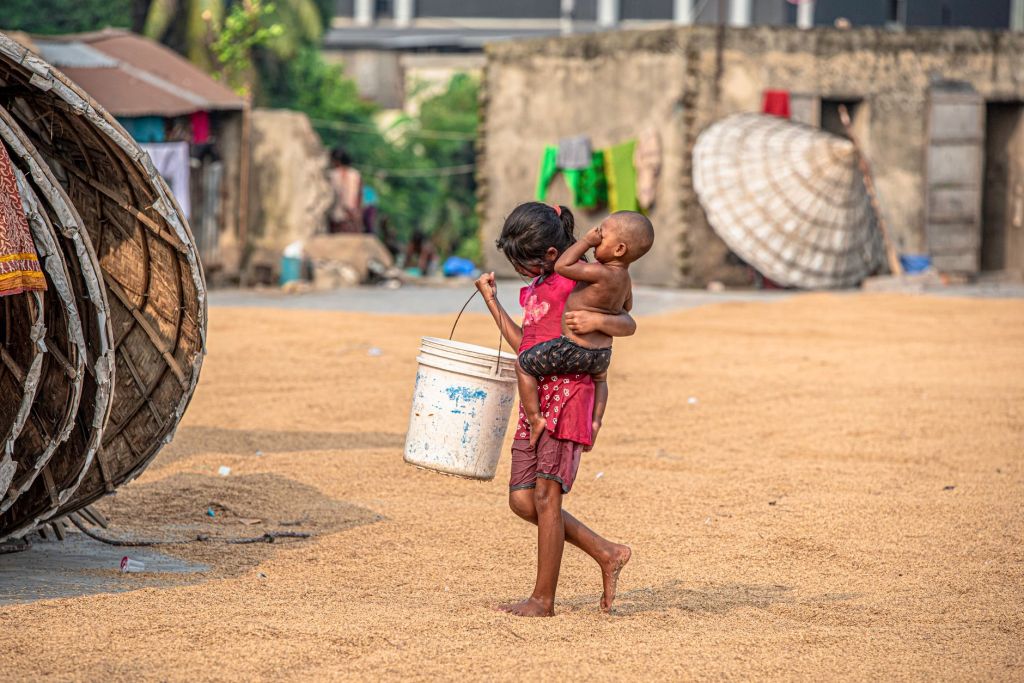
Half of the world’s children are now exposed to at least three overlapping climate hazards that threaten their health, education and survival, according to a new report by Unicef, underscoring the growing human consequences of climate change.
The report highlights how rising temperatures, severe storms, prolonged droughts and increasing floods are reshaping childhood across the globe. More than one billion children are estimated to be living under the combined pressure of multiple climate-related threats, with impacts extending beyond environmental damage to education, health, food security and future opportunities.
Unicef’s Children’s Climate Risk Report assessed children’s exposure to eight major hazards: extreme heat, heatwaves, droughts, wildfires, river floods, coastal flooding, tropical storms, and sand and dust storms.
Its findings reveal that climate risks are no longer confined to traditionally vulnerable regions. Nearly every child in the world—including those living in high-income countries—is now exposed to at least one climate hazard, while approximately 123,000 children experience more than six overlapping threats throughout their lives.
Among the most powerful examples presented in the report is a remote community in Papua New Guinea, where climate impacts have directly disrupted children’s access to education.
In Launkalana village in the Rigo district, students must cross the crocodile-inhabited Kemp Welch River to reach school after a footbridge was washed away during heavy rains and never rebuilt. With limited alternatives, many children swim across the river daily, while younger students receive priority access to the few community boats available.
Fifteen-year-old Lorna is among those facing this challenge. According to Unicef field staff, social and cultural factors further restrict attendance for adolescent girls, especially during periods when crossing the river is discouraged.
Teachers report that seasonal flooding, strong currents and polluted water have caused injuries, illness and learning interruptions, creating long-term educational setbacks for the community.
The findings mirror challenges increasingly visible across Southeast Asia, one of the world’s most climate-sensitive regions.
In Bangladesh and Myanmar, repeated floods and tropical storms regularly force school closures, damage infrastructure and displace families. Children often miss months of learning due to evacuation and recovery periods.
In Indonesia, rising temperatures and prolonged drought conditions have intensified water scarcity in several regions, affecting children’s nutrition, sanitation and school attendance. Coastal communities are also experiencing increasing exposure to tidal flooding and sea-level rise.
The Philippines, among the countries most frequently affected by tropical cyclones, continues to face repeated disruptions to education and child welfare during severe storm seasons. Typhoons regularly damage schools and community facilities, leaving children vulnerable to interrupted learning and health risks.
Similarly, in Vietnam’s Mekong Delta, children face a combination of river flooding, saltwater intrusion and extreme weather that threatens agriculture-dependent livelihoods and local food security.
Unicef identified South and Southeast Asia as among the most exposed regions globally because of dense populations, extensive coastlines and growing climate variability. Children living in these areas often face several hazards simultaneously rather than isolated climate events.
The report also identified the Sahel region of Africa as another hotspot, where millions of children face overlapping exposure to extreme heat, heatwaves and dust storms.
At the same time, wealthier nations remain vulnerable. In Italy, for example, more than six million children are exposed to prolonged heatwaves and drought, demonstrating that climate impacts are increasingly universal.
Unicef Executive Director Catherine Russell stated that heatwaves, floods, droughts and wildfires are already shaping children’s daily lives and limiting access to education, health and development opportunities.
The agency called on governments and businesses to accelerate emissions reductions while strengthening climate adaptation measures that prioritise children’s needs.
Recommended actions include building climate-resilient schools and health systems, upgrading roads and bridges, improving disaster preparedness and investing in infrastructure designed to withstand future climate shocks.
According to Unicef, protecting children from climate risks today is not only a humanitarian priority but an investment in more resilient societies.
As climate hazards continue to intensify and overlap, the report concludes that placing children at the centre of climate policy will be essential for securing a safer and more equitable future.

 PARYAWARAN
Leave a comment