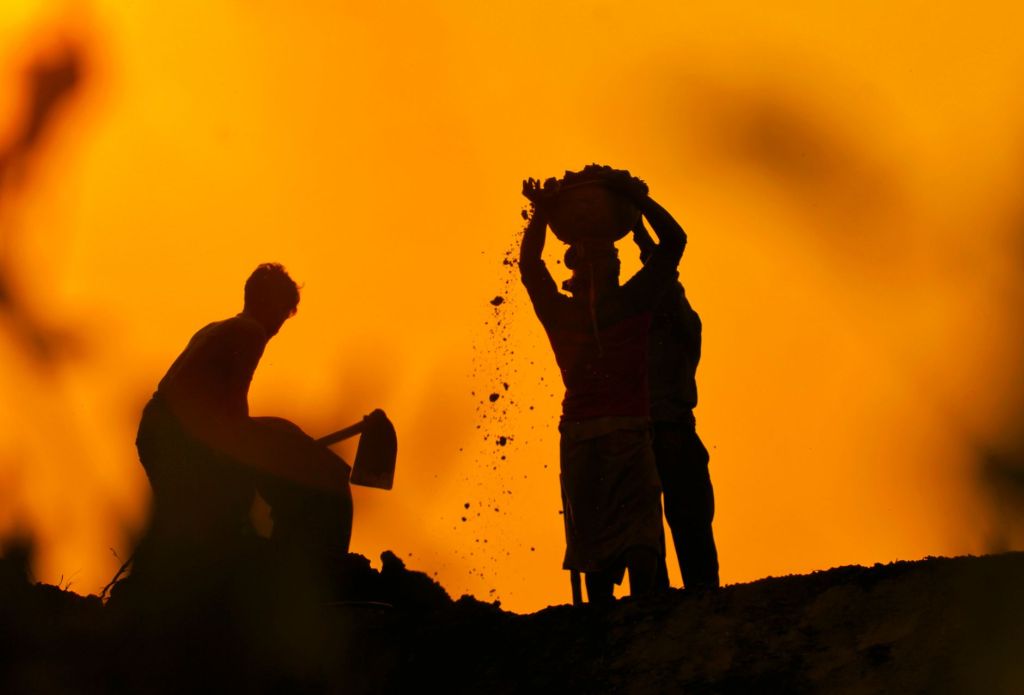
India’s intensifying heatwaves may be triggering a public health catastrophe on a scale far greater than officially acknowledged, with new research suggesting that tens of thousands of deaths linked to extreme heat are going uncounted every year.
A study published in Frontiers in Environmental Health estimates that a single day of extreme heat can cause around 3,400 excess deaths across India. A severe five-day heatwave could result in nearly 30,000 additional deaths nationwide—figures that dwarf the government’s official heat-related mortality records.
The findings expose what researchers describe as a vast and largely invisible death toll unfolding as climate change drives temperatures to unprecedented levels across the country.
India is already reeling under another brutal summer. Temperatures in parts of Uttar Pradesh crossed 48°C in May, while large swathes of northern and central India baked under prolonged spells of extreme heat. Scientists warn that such events are no longer anomalies but are rapidly becoming the new normal as fossil fuel-driven climate change accelerates.
Yet official records tell a dramatically different story. Government statistics typically report between 500 and 1,500 heatwave deaths annually across the entire country. Researchers and public health experts argue these figures represent only the tip of the iceberg.
Heat rarely kills in obvious ways. Instead, it acts as a lethal multiplier, aggravating heart disease, respiratory illnesses, kidney disorders and other underlying conditions. Victims often die from these complications, leaving heat absent from death certificates and official databases.
“The real death toll is hidden in plain sight,” the study suggests.
To uncover the scale of the crisis, researchers carried out the first nationwide district-level assessment of heatwave mortality. Using mortality data from 10 Indian cities representing different climatic zones, they estimated excess deaths across all 765 districts by matching regions with similar climate characteristics.
Unlike conventional reporting systems that focus mainly on heatstroke fatalities, the study captured all excess deaths occurring during heatwave periods, revealing a far broader and deadlier impact.
The results paint a grim picture.
Uttar Pradesh alone was linked to an estimated 8,100 excess deaths during a five-day heatwave. Major urban centres such as Ahmedabad, Jaipur and Surat were each associated with more than 250 additional deaths during a single extreme heat event.
Researchers caution that even these alarming numbers are likely underestimates.
Rural India—where millions depend on outdoor labour, lack access to air conditioning and face limited healthcare services—is particularly vulnerable. Rising temperatures, chronic poverty, inadequate housing and weak medical infrastructure combine to create deadly conditions for some of the country’s most marginalized communities.
The study also highlights a stark climate injustice. The five states suffering the highest heatwave mortality burden account for nearly 66 percent of India’s excess heat-related deaths while contributing just 29 percent of the national GDP.
In other words, the regions least equipped to adapt are paying the highest price.
The findings raise urgent questions about whether India’s existing heat preparedness measures are sufficient for a rapidly warming future. Researchers are calling for stronger local heat action plans, climate-resilient healthcare systems, expanded cooling infrastructure and more effective early-warning mechanisms.
Without aggressive intervention, experts warn that heatwaves could become one of the country’s deadliest climate-related disasters.
The implications extend far beyond India. Many nations across South Asia and Sub-Saharan Africa face similar combinations of extreme temperatures, inadequate health systems and poor mortality surveillance. Researchers say the methodology used in India could help uncover hidden heat-related death burdens in other vulnerable regions.
Globally, the warning signs are already flashing red.
According to the World Meteorological Organization, the period from 2015 to 2025 was the hottest eleven-year stretch ever recorded. Across Europe, heat-related mortality has surged as temperatures continue to break records.
A recent study by researchers from Imperial College London and the London School of Hygiene & Tropical Medicine estimated that climate change contributed to approximately 16,500 additional deaths across 854 European cities during the summer of 2025. In 2024, more than 62,000 people reportedly died during European heatwaves.
Spain recorded 101 heat-related deaths in May 2026 alone—more than three times the decade-long average for the month—prompting health officials to warn that extreme heat is arriving earlier and striking harder than ever before.
As the planet continues to warm, the Indian study delivers a stark message: heatwaves are no longer seasonal inconveniences but a mounting humanitarian crisis. Behind every spike in temperature lies a growing, largely uncounted toll of lives lost—victims of a climate emergency that official statistics have failed to fully capture.
The numbers suggest that India’s deadliest natural disaster may not be floods, cyclones or earthquakes. It may be the heat itself.



 PARYAWARAN
Leave a comment