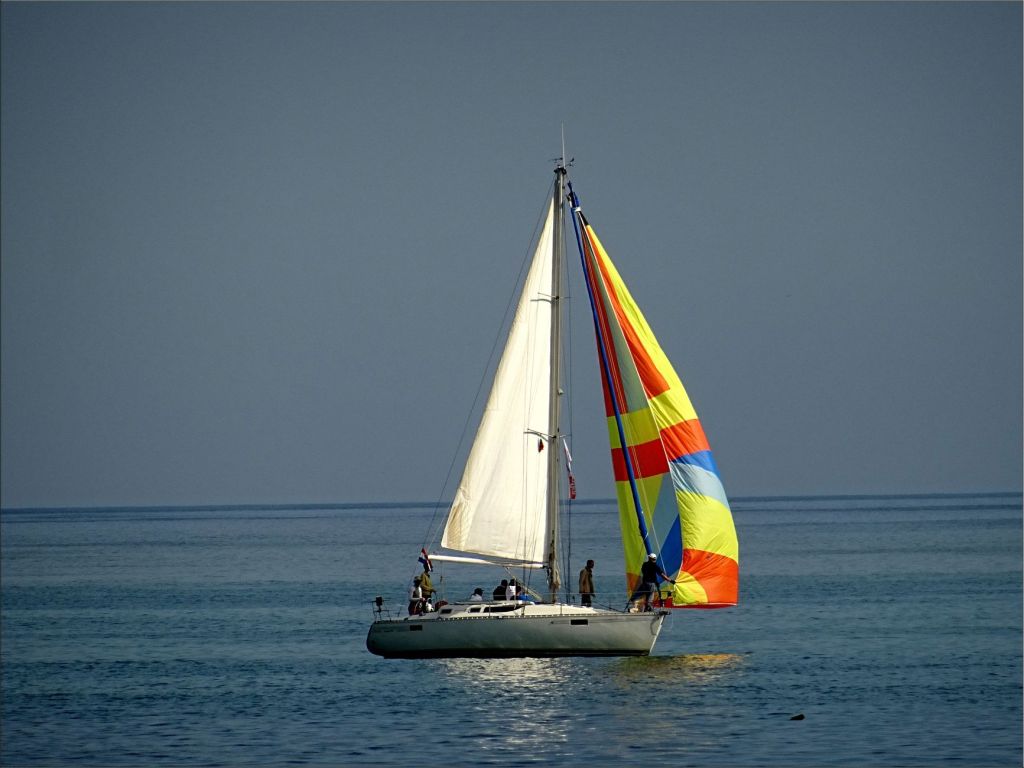
World Sailing has initiated the first comprehensive life cycle assessment (LCA) of Olympic sailing equipment, marking a significant step toward reducing the environmental footprint of competitive sailing. The initiative is designed to evaluate the environmental impacts associated with the production, use, transportation, maintenance, and disposal of Olympic-class sailing equipment, providing a scientific basis for future sustainability measures across the sport.
Although sailing is widely regarded as an environmentally friendly sport because it relies on wind rather than fossil fuels for propulsion, the manufacture and management of sailing equipment involve resource-intensive industrial processes. Boats, sails, masts, foils, and related equipment are produced using materials such as carbon fibre, fibreglass, and PVC foam, all of which require high energy inputs during production and present significant recycling challenges at the end of their useful life.
The life cycle assessment seeks to identify the environmental impacts generated throughout an entire Olympic competition cycle, from equipment manufacturing to eventual reuse, recycling, or disposal. By collecting detailed data from boat manufacturers, equipment suppliers, and athletes, the study aims to establish a comprehensive baseline for understanding where emissions and waste are generated and how they can be reduced.
The project also examines how athletes purchase and use equipment. At the elite level, sailors frequently own multiple boats, sails, masts, and foils to maximise performance and adapt to varying weather conditions. While this practice offers a competitive advantage, it also increases material consumption, transportation requirements, and equipment waste. Understanding these patterns is expected to help identify opportunities for reducing unnecessary production without compromising sporting fairness.
Transportation is another major focus of the assessment. Competitive sailors participate in numerous international events throughout the four-year Olympic cycle, requiring boats and equipment to be transported across continents while athletes, support staff, and officials travel extensively by air. The assessment will evaluate how competition schedules, logistics, and equipment movement contribute to the sport’s overall carbon footprint and identify strategies to improve efficiency.
The initiative is being carried out in collaboration with sustainability experts who are gathering information from manufacturers regarding production methods, material sourcing, energy consumption, and waste management practices. Athletes are also providing data on equipment replacement cycles, travel frequency, maintenance practices, and equipment lifespan. The resulting analysis will offer one of the most detailed environmental assessments ever conducted within Olympic sailing.
The findings are expected to help World Sailing introduce evidence-based sustainability measures rather than relying on assumptions. Potential recommendations include increasing the use of recycled and recyclable materials, redesigning equipment to extend its service life, encouraging greater reuse of boats between athletes, and developing circular economy approaches that minimise waste throughout the equipment lifecycle.
Manufacturers are already exploring alternative materials that could reduce environmental impacts without affecting performance. One area under investigation is the replacement of traditional PVC foam cores with recycled polyethylene terephthalate (PET) materials, which offer improved sustainability while maintaining structural integrity. However, any material changes must ensure that boats remain durable, affordable, and competitively balanced for athletes worldwide.
Maintaining accessibility remains an important consideration. More sustainable equipment should not significantly increase manufacturing costs or create barriers for sailors from developing nations. Equipment standards must balance environmental improvements with affordability to preserve the global participation that defines Olympic sailing.
Beyond equipment manufacturing, the project also highlights the importance of extending the useful life of racing boats. Rather than discarding equipment after elite competition, boats can continue to serve youth sailors, sailing clubs, training programmes, and emerging national teams. Strengthening secondary markets and formal reuse programmes could substantially reduce waste while supporting wider participation in the sport.
The assessment reflects the growing integration of sustainability into international sport. Environmental considerations are increasingly influencing equipment design, procurement policies, event management, and governance across many sporting disciplines. By establishing measurable environmental benchmarks, sports organisations are beginning to incorporate sustainability alongside traditional performance and safety standards.
World Sailing intends to use the assessment results to inform equipment selection and sustainability requirements for future Olympic Games. The data may contribute to supplier selection for the Los Angeles 2028 Olympics, while independently verified life cycle assessments are expected to become a mandatory requirement for Olympic sailing classes from the Brisbane 2032 Olympic Games onwards.
The initiative also has implications beyond Olympic competition. Since many equipment manufacturers supply both professional racing and recreational boating markets, improvements in materials, production methods, and recycling systems could influence the broader marine industry. Advances developed through Olympic sailing may therefore contribute to more sustainable recreational boating and marine manufacturing worldwide.
The project represents an important shift toward data-driven environmental decision-making within sport. By identifying the largest sources of emissions and material waste, World Sailing aims to develop targeted interventions that reduce the sport’s ecological footprint while maintaining high standards of competition and accessibility. If successful, the initiative could establish a model for other international sports seeking to measure and minimise the environmental impacts of specialised sporting equipment through science-based sustainability practices.


 PARYAWARAN
Leave a comment