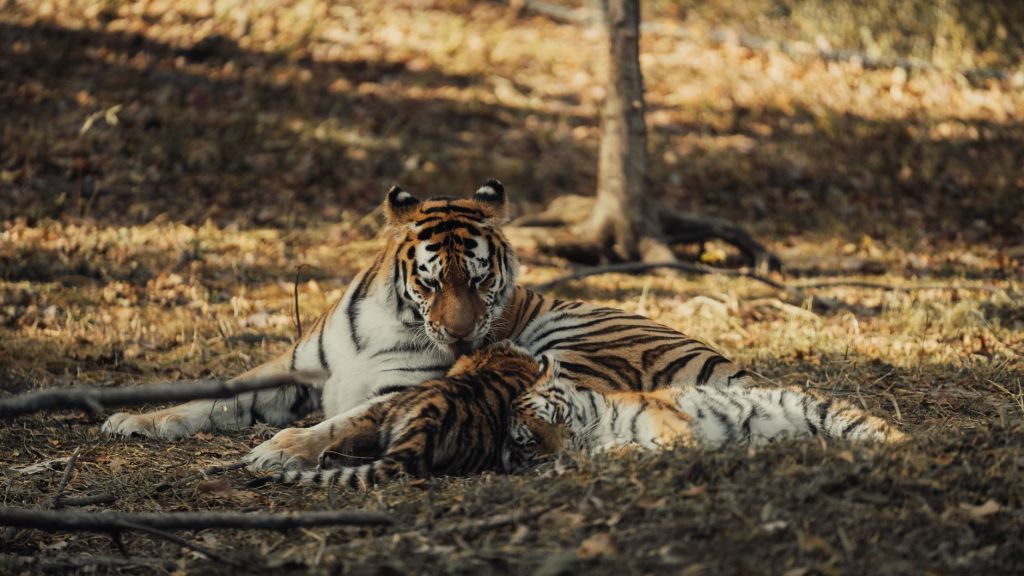
A significant conservation milestone has emerged from Odisha’s Similipal Tiger Reserve, where a translocated tigress from Maharashtra has given birth to four cubs, offering renewed hope for one of India’s most unusual and genetically vulnerable tiger populations.
The birth marks an important development in ongoing efforts to strengthen the genetic health of Similipal’s tigers and address concerns over long-term inbreeding that had raised fears about the population’s future survival.
The tigress, named Zeenat, was moved to Similipal from Maharashtra’s Tadoba-Andhari Tiger Reserve as part of a carefully planned tiger translocation programme launched to improve genetic diversity in the reserve. Recent camera-trap images documenting the tigress carrying her cubs through the forest have become a powerful symbol of what conservation interventions can achieve when supported by scientific planning and long-term monitoring.
Similipal Tiger Reserve, located in Odisha’s Mayurbhanj district, occupies a unique place in India’s conservation landscape. It is internationally known for its population of pseudo-melanistic tigers—animals commonly referred to as black tigers because of their unusually dark appearance.
Unlike true melanism, pseudo-melanism is caused by extremely dense and broadened stripes that merge across large parts of the body, creating a darker coat pattern. These tigers remain genetically Bengal tigers but exhibit a rare visual trait that has attracted global scientific interest.
However, what makes Similipal’s black tigers remarkable also became a cause for concern.
Research over recent years indicated that the unusually high frequency of pseudo-melanistic individuals may be linked to a restricted breeding population and prolonged inbreeding. Because Similipal’s tiger population remained relatively isolated, opportunities for natural genetic exchange with other tiger landscapes were limited.
Conservation scientists and wildlife managers warned that continued inbreeding could reduce genetic diversity, weaken resilience to disease and ultimately threaten the population’s long-term viability.
To counter this risk, forest authorities introduced a strategy increasingly discussed in modern wildlife conservation: genetic rescue.
The approach involves introducing unrelated individuals into isolated populations to increase genetic mixing and reduce harmful effects associated with inbreeding. Under this initiative, selected tigers from Maharashtra’s Tadoba-Andhari Tiger Reserve—known for maintaining a healthy tiger population—were translocated into Similipal.
Zeenat became one of the first tigers moved under this effort.
The recent birth of four cubs is being viewed as an early indication that the programme may be helping establish a stronger genetic foundation for future generations of Similipal tigers.
Wildlife experts caution that one successful litter alone does not guarantee long-term recovery. Genetic improvement requires sustained monitoring across multiple breeding cycles, habitat security and continued protection from threats such as poaching and human disturbance.
Camera trapping, genetic analysis and population surveys are expected to play an important role in assessing whether future generations show increased diversity while retaining healthy breeding success.
The development also highlights a broader shift in India’s tiger conservation model. Earlier efforts focused largely on habitat protection and population recovery. Increasingly, conservation managers are incorporating genetics into decision-making, recognising that population size alone does not determine long-term survival.
Similipal’s case demonstrates how isolated wildlife populations can face hidden risks even when animal numbers appear stable.
If the translocation programme succeeds over time, it could serve as a model for managing other fragmented wildlife populations across India where isolation threatens genetic health.
For now, the sight of a tigress successfully raising four cubs in Similipal represents more than a conservation achievement. It signals a possible turning point for a rare tiger population whose future may depend on restoring the genetic diversity needed to survive in the wild.

 PARYAWARAN
Leave a comment