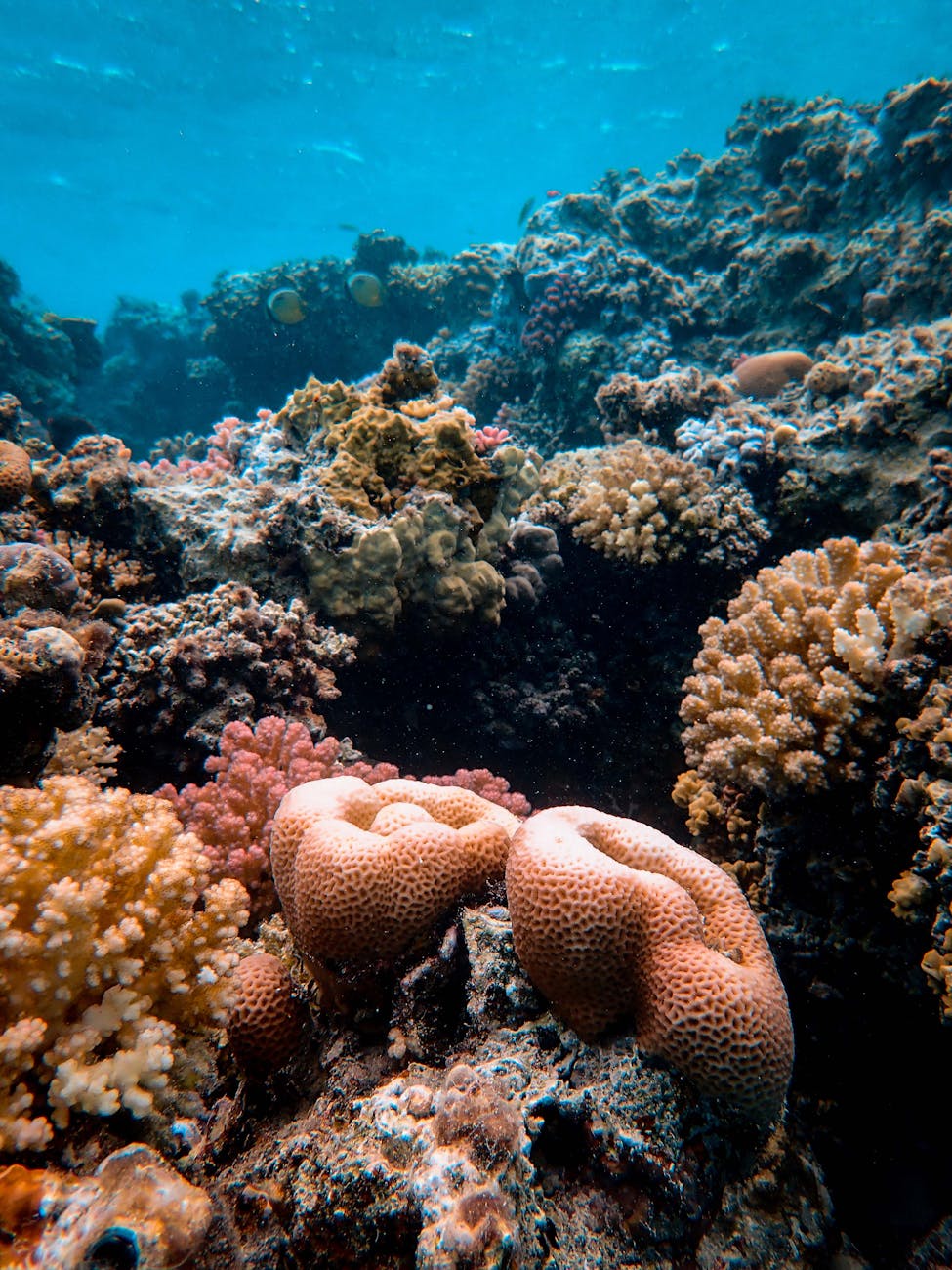
As global temperatures continue to rise, coral reefs—among the planet’s most diverse and valuable ecosystems—are facing an unprecedented crisis. Increasing marine heat waves, ocean warming and human pressures are accelerating coral bleaching events across tropical oceans, threatening biodiversity, food systems and coastal communities. Yet amid widespread reef decline, emerging scientific efforts are identifying pockets of resilience: coral ecosystems that appear capable of surviving extreme heat and supporting reef recovery in the future.
Since 2023, record marine heat events have triggered the most severe global coral bleaching episode on record, affecting reefs across dozens of countries and territories. When exposed to prolonged heat stress, corals expel the microscopic algae that provide most of their energy and vibrant color. The result is bleaching—an increasingly common phenomenon that weakens corals and often leads to large-scale mortality.
Despite these alarming trends, some reef systems continue to survive and even thrive under conditions that devastate neighboring areas. These ecosystems, often referred to as “super reefs,” have become the focus of growing scientific attention because of their potential role in preserving coral biodiversity and supporting long-term adaptation to climate change.
Super reefs are not simply healthy reefs. They are ecosystems that demonstrate measurable resilience to rising temperatures over time. This resilience may result from genetic adaptation, unique local environmental conditions such as cooler currents, or a combination of ecological factors. Equally important, these reefs may act as sources of coral larvae capable of repopulating degraded reef systems across wider marine landscapes.
Research initiatives in the Pacific have begun identifying these resilient coral habitats in regions that already support marine conservation measures. The objective is not only to locate reefs capable of withstanding heat stress but also to integrate scientific findings into practical conservation strategies.
The urgency behind this work reflects the scale of global reef decline. Coral ecosystems are under pressure not only from climate change but also from coastal development, sedimentation, sewage discharge, agricultural runoff, plastic pollution and destructive fishing practices. Together, these stressors have contributed to the loss of more than half of the world’s coral reefs. Without stronger intervention, projections suggest that the majority of tropical reefs could disappear within decades.
The Pacific nation of the Marshall Islands has become one of the important locations for studying climate-resilient coral systems. Consisting largely of low-lying coral atolls, the country depends heavily on reefs for food security, fisheries and physical protection from waves and sea-level rise. Coral ecosystems form the very foundation of these islands and sustain both livelihoods and marine biodiversity.
Recent scientific efforts in the region have combined field surveys, oceanographic modeling and experimental testing to identify reef areas exposed to unusually warm waters where surviving corals may possess greater heat tolerance. Coral fragments collected from selected sites have been subjected to controlled temperature stress to evaluate their response under simulated heat-wave conditions.
These experiments have revealed important variations in resilience, even among corals living close to one another. Some colonies bleached rapidly, while others remained healthy despite identical conditions. Such findings suggest that heat tolerance may vary significantly within coral populations and could offer new pathways for conservation and restoration.
Technology is also transforming the search for resilient reefs. Autonomous surface vehicles equipped with cameras and mapping systems are enabling researchers to monitor vast reef areas with greater speed and precision than traditional underwater surveys. These systems can collect thousands of images across extensive reef networks and generate detailed visual records over time.
Combined with artificial intelligence and three-dimensional reef mapping, this approach allows scientists to track bleaching patterns, identify surviving coral colonies and better understand how reef structure influences exposure to heat stress. Repeated monitoring can reveal which corals recover after warming events and which possess traits associated with long-term resilience.
The implications extend beyond observation. Increasing attention is being directed toward reef restoration strategies that prioritize heat-tolerant corals instead of relying solely on vulnerable species. Experimental restoration projects are exploring whether resilient coral populations can serve as nurseries for rebuilding degraded reef systems.
At a broader scale, conservation planning is beginning to consider networks of protected reefs connected by ocean currents. Such interconnected systems could allow coral larvae from resilient populations to disperse naturally across regions, strengthening recovery and increasing the overall adaptive capacity of reef ecosystems.
This emerging vision reflects a shift in conservation—from protecting isolated ecosystems to building connected landscapes capable of withstanding climate pressures.
While resilient reefs offer hope, they do not eliminate the need to reduce greenhouse gas emissions and address local environmental pressures. Their survival depends on both scientific innovation and stronger protection from human disturbance.
As ocean temperatures continue to climb, identifying and safeguarding these coral strongholds may become one of the most important strategies for preserving marine ecosystems in the decades ahead.


 PARYAWARAN
Leave a comment