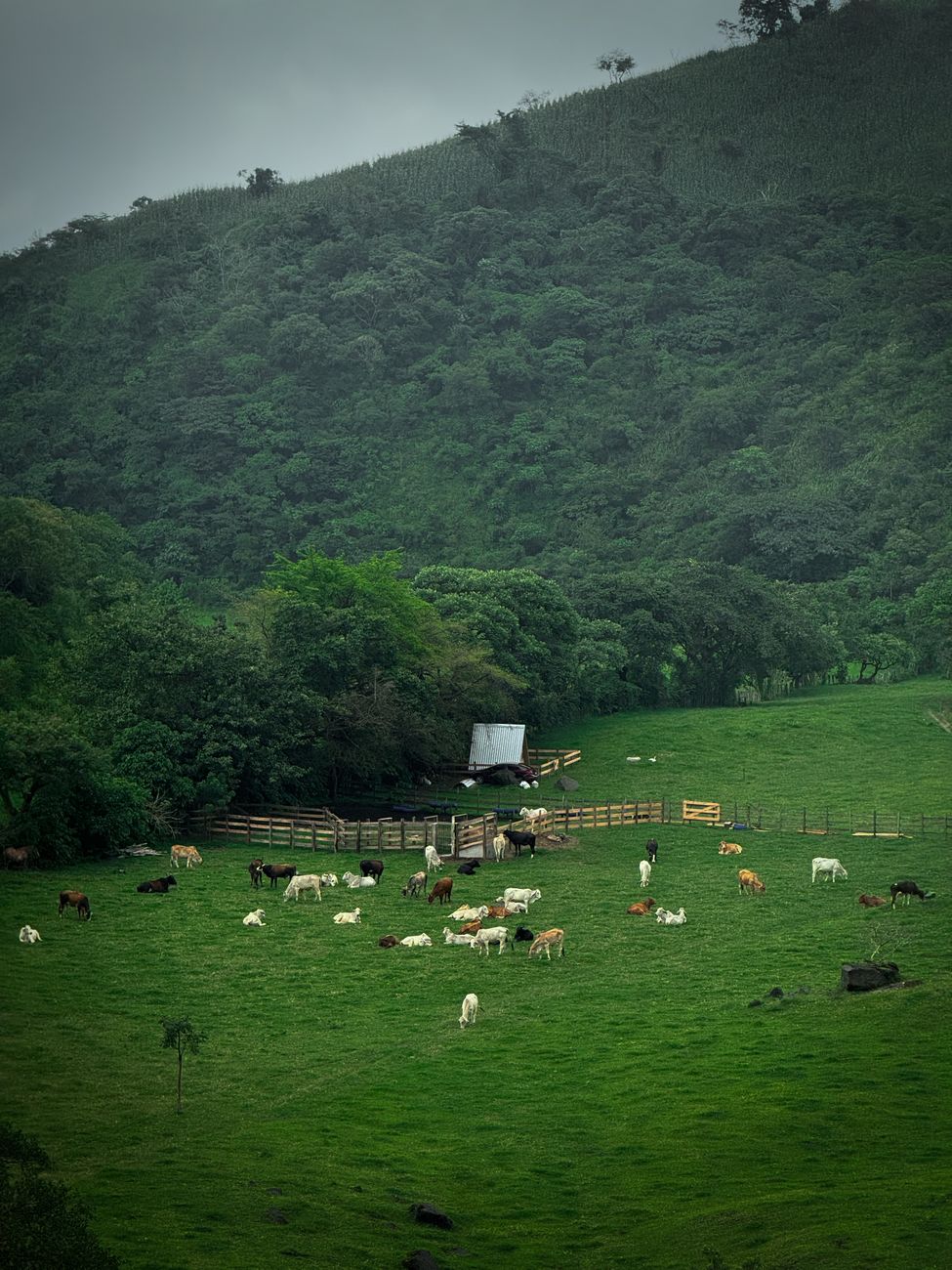
Colombia has enacted its first national law requiring beef products to be fully traceable back to their origin, marking a major policy shift aimed at reducing deforestation linked to cattle ranching and strengthening accountability across livestock supply chains.
The legislation, approved this month, establishes a mandatory cattle traceability framework that will require livestock to be tracked from the place of birth through movement, sale, slaughter, processing, and ultimately to retail markets. The measure is expected to be implemented over the next two years through a phased rollout of regulations and monitoring systems.
Environmental groups and policy observers have described the law as a potentially transformative step for forest governance in the Amazon region, where livestock expansion remains one of the most significant drivers of deforestation.
The move follows years of investigations and advocacy highlighting the links between cattle production and forest destruction in Colombia’s protected landscapes. Reports found that beef entering commercial supply chains was, in some cases, connected to cattle raised on illegally cleared land inside national parks and environmentally protected areas.
The new law seeks to close longstanding regulatory gaps by introducing mandatory verification of cattle origins and creating legal obligations across the supply chain.
The issue has gained greater international attention in recent years as commodity-exporting countries face increasing pressure to demonstrate that agricultural products entering global markets are free from deforestation. Regulatory changes in major importing markets have accelerated this trend, particularly for products associated with forest conversion.
The Amazon rainforest remains one of the world’s most important ecological systems, playing a vital role in storing carbon, regulating rainfall patterns, and maintaining atmospheric balance. Scientists have repeatedly warned that continued forest degradation could undermine regional climate stability and weaken the forest’s capacity to absorb greenhouse gas emissions.
Within many Amazon countries, cattle ranching has become closely associated with forest clearing. Land is frequently converted into pasture through logging and burning, creating economic incentives that drive agricultural expansion into previously forested areas.
In Colombia, however, the dynamics surrounding cattle expansion extend beyond conventional agricultural activity.
Investigations conducted by the Environmental Investigation Agency (EIA) previously identified structural weaknesses in cattle monitoring systems and documented patterns of livestock movement that obscured the original source of animals entering commercial markets.
According to earlier findings by EIA, cattle were often transferred through multiple ranches and ownership records, making it difficult to determine whether animals originated from legal agricultural land or protected forest areas.
Additional analysis conducted by EIA indicated that more than 200,000 cattle were sourced from protected areas between 2020 and 2024, despite cattle ranching being prohibited in those locations. Colombia’s national cattle population was estimated at around 30 million head in 2025.
Investigative reports also highlighted how illegal land occupation and forest clearing can become financially attractive in remote regions. In some areas, cattle grazing has reportedly been used to establish claims over cleared land and strengthen informal control over territories.
Environmental governance challenges are further complicated by the presence of organised criminal activity and weak enforcement in remote forest regions. Reports have indicated that environmental crimes linked to illegal land use can generate substantial economic returns and undermine conservation efforts.
Environmental advocacy group Mighty Earth stated that mandatory traceability has the potential to transform accountability within the livestock sector by connecting cattle movement records with deforestation monitoring systems.
According to the organisation, linking environmental oversight with supply chain transparency may reduce the risk that beef and leather products become associated with forest destruction.
The Colombian initiative also arrives at a time when voluntary sustainability mechanisms are facing growing scrutiny.
Across South America, voluntary commitments designed to reduce commodity-linked deforestation have shown mixed results. Industry-led agreements have often struggled with implementation, enforcement, and long-term participation.
One of the most widely discussed examples was the Soy Moratorium in Brazil, where producers and traders pledged not to source soy from newly deforested land. While initially credited with helping reduce forest loss in certain areas, changes in industry participation have raised concerns about the long-term durability of voluntary approaches.
Environmental groups increasingly argue that legal obligations, rather than voluntary commitments, are necessary to ensure effective due diligence and accountability.
Under Colombia’s new framework, authorities are expected to establish regulations defining what qualifies as a “deforestation-free producer,” develop surveillance mechanisms in forest-risk zones, and create compliance requirements for all participants in the cattle supply chain.
The regulations are expected to cover multiple stages of commercial activity, including livestock auctions, transport systems, slaughterhouses, processing facilities, and retailers.
Observers note that the success of the law will depend heavily on implementation capacity, transparency, data integration, and enforcement mechanisms.
Monitoring systems must be capable of identifying irregular livestock movements, detecting cattle linked to illegal land conversion, and ensuring that penalties are applied where violations occur.
Environmental groups also emphasise that traceability alone cannot eliminate deforestation unless accompanied by stronger institutional coordination, field inspections, and clear consequences for non-compliance.
The Colombian measure is increasingly being viewed as a regional test case for integrating environmental protection with agricultural governance.
As Amazon countries continue balancing economic development with conservation goals, the success or failure of this policy could influence future approaches across Latin America.
By making cattle origins visible throughout the supply chain, Colombia is attempting to address one of the most persistent drivers of forest loss and establish a new standard for environmental accountability in global agricultural trade.

 PARYAWARAN
Leave a comment