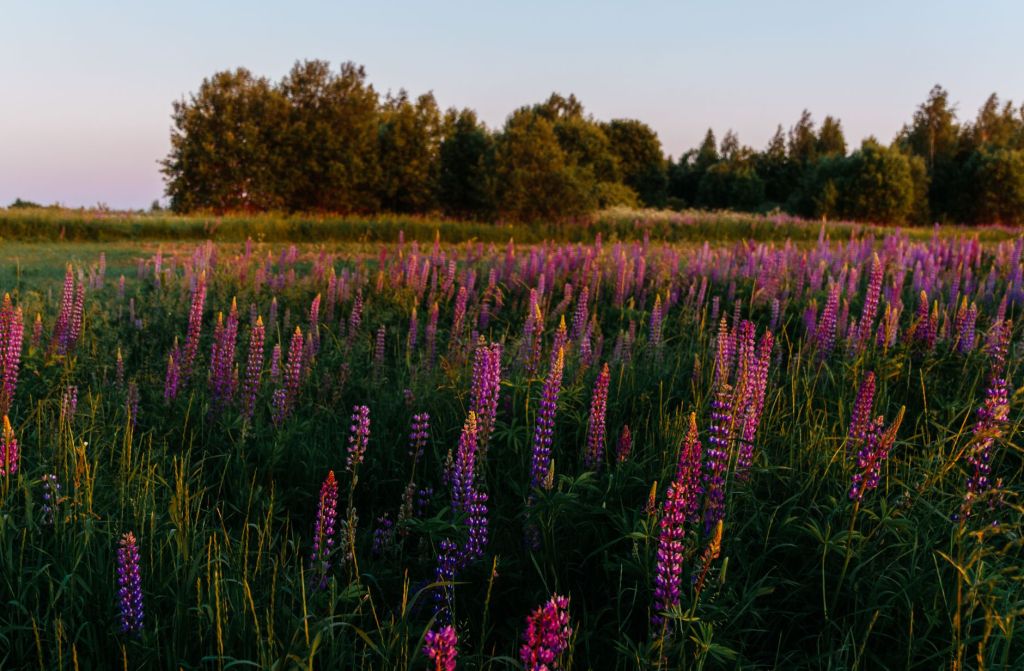
A long-term study reveals that abandoned farmland can naturally transform into species-rich wildflower meadows through simple hay cutting, offering a cost-effective alternative to traditional grassland restoration methods.**
An abandoned agricultural field in eastern England has transformed into a flourishing wildflower meadow without the use of commercial seed mixes, according to a new study by researchers at University College London (UCL). The findings suggest that natural regeneration, combined with traditional annual hay cutting, can restore biodiversity on former farmland while reducing the costs and labor associated with conventional meadow restoration.
Published in the journal Restoration Ecology, the research tracked vegetation changes between 2011 and 2022 on a two-hectare (five-acre) field in Bodham, North Norfolk. The farmland had been abandoned in 2005 after years of crop cultivation, and researchers deliberately chose not to sow seeds or undertake other restoration measures, allowing nature to guide the recovery process.
The study found that within 10 to 15 years, the site developed into a species-rich wildflower meadow, challenging the widespread practice of using commercial seed mixes in government-funded grassland restoration projects.
Natural Regeneration Creates Biodiverse Wildflower Meadow
Wildflower meadows are among the UK’s most valuable ecosystems, providing habitat for pollinators, birds, mammals, and rare plant species while improving soil health, water quality, and climate resilience. However, more than 90% of the UK’s traditional wildflower meadows have disappeared since World War II due to agricultural intensification.
At the same time, thousands of hectares of abandoned farmland across the UK and Europe are being considered for ecological restoration. The new research indicates that many of these sites could recover naturally with minimal intervention, making habitat restoration significantly more affordable.
Lead author Professor Carl Sayer of UCL Geography said the findings raise important questions about whether restoration projects rely too heavily on commercial seed mixes. According to the researchers, allowing plants to recolonize naturally helps preserve local genetic diversity and supports species already adapted to regional environmental conditions.
Unlike seeded meadows, naturally regenerated grasslands are likely to reflect local ecosystems rather than becoming biologically uniform. The researchers argue that giving nature time to recover may often produce healthier and more resilient habitats.
Long-Term Monitoring Shows Steady Increase in Plant Diversity
The study is one of the few long-term investigations into natural grassland recovery in the UK. The research site, known as Sayer’s Meadow, remained largely untouched after farming ended, with annual hay cutting being the only management practice.
Every two to three years, researchers carried out detailed vegetation surveys across the meadow, recording every plant species encountered. They also monitored 24 permanent one-square-metre plots to measure changes in species richness over time.
The results showed remarkable ecological recovery. The average number of plant species within each survey plot nearly doubled—from around 10 species in 2011 to almost 20 species by 2022.
Several locally rare plants gradually established themselves, including southern marsh orchid, greater tussock-sedge, yellow rattle, and common centaury. These species are considered indicators of healthy, species-rich grasslands.
Researchers also mapped the locations of orchids and yellow rattle using GPS. Initially appearing in small numbers, both species spread rapidly across the meadow until they became too abundant to count individually. Today, the field supports thousands of orchids and has become a local attraction during the flowering season.
How Did Rare Wildflowers Reach the Meadow?
One of the study’s most intriguing findings was the arrival of several uncommon plant species despite their nearest known populations being located considerable distances away.
While the exact mechanism remains uncertain, researchers believe wildlife may have played an important role in seed dispersal. Deer are considered one possible vector, transporting seeds naturally across the landscape and contributing to the meadow’s increasing diversity.
The findings highlight the importance of natural ecological processes that often go unnoticed in restoration planning.
Low-Cost Grassland Restoration with Big Conservation Benefits
Traditional wildflower meadow restoration projects frequently involve expensive interventions such as purchasing commercial seed mixtures, removing nutrient-rich topsoil, and deep ploughing before planting. These methods require substantial financial investment and ongoing management.
By contrast, the Norfolk field recovered through a much simpler approach. Annual hay cutting prevented dominant grasses from overwhelming other plants while allowing native wildflowers to gradually establish themselves.
The researchers say this low-cost restoration model could help governments and conservation organizations restore much larger areas of abandoned farmland without significantly increasing budgets.
Beyond increasing plant diversity, species-rich grasslands provide habitat for bees, butterflies, birds, and small mammals. They also improve soil health, reduce nutrient pollution, store carbon, and strengthen ecosystem resilience to climate change.
Rethinking Wildflower Meadow Restoration
The researchers acknowledge that natural regeneration may not work everywhere. Sites heavily invaded by non-native species or isolated from nearby sources of native plants may still require active restoration measures.
However, the study demonstrates that under suitable conditions, patience can be as valuable as planting.
As countries work toward ambitious biodiversity restoration and climate goals, the findings suggest that allowing nature to recover with minimal intervention could become an important strategy for restoring abandoned farmland. Rather than relying solely on commercial seed mixes, conservation planners may increasingly consider natural regeneration as a practical, scalable, and cost-effective pathway to rebuilding wildflower meadows and supporting wildlife across agricultural landscapes.



 PARYAWARAN
Leave a comment