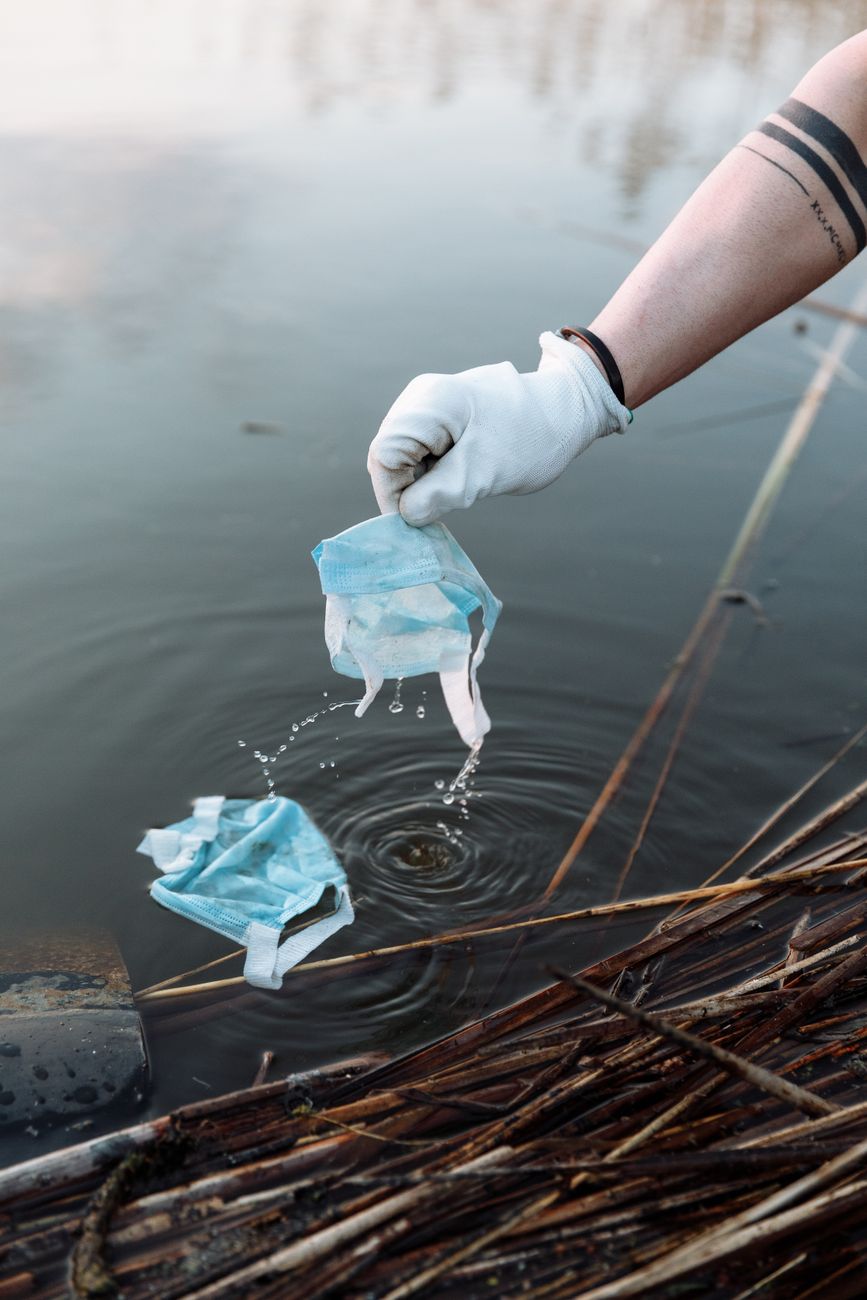
A nature-based wastewater system in South Africa is turning polluted river water into a resource for growing food, offering a potential model for climate-hit communities facing water and food insecurity.
For years, the Stiebeuel River in South Africa’s Western Cape carried a toxic mix of sewage, chemicals and traces of pharmaceutical waste through communities struggling with rapid population growth and inadequate infrastructure.
Today, part of that polluted water is being transformed into a resource for growing vegetables — using little more than stones, sand, heat-treated wood and solar energy.
Researchers from the University of Cape Town have developed a nature-based wastewater treatment system in Langrug, an informal settlement near Stellenbosch. The system now treats about 36,000 litres of river water each day, removing pollutants and pathogens before most of the treated water is returned to the river.
Around 3,000 litres is retained for irrigating food-producing gardens at the Water Hub, where residents grow vegetables for the community.
The project could offer a practical approach for rural and low-income communities confronting two increasingly connected challenges: access to clean water and reliable food supplies as climate change intensifies droughts, floods and other disruptions.
From polluted river to irrigation water
The Water Hub was established in 2018 on the site of an abandoned wastewater treatment facility. Rather than building a conventional treatment plant, researchers adapted the old drying beds into a series of filtration cells.
The system operates off-grid and is powered by solar energy. Water is pumped from the polluted river into the treatment cells, where it moves slowly through different layers over roughly five days.
The first stage uses large stones to capture suspended particles and some pollutants. The water then passes through biochar — wood heated to about 800C — which helps remove pharmaceutical residues, ammonia and other contaminants.
Smaller stones and layers of sand provide further filtration, removing remaining pollutants before the water is released.
The approach avoids the need for chemical treatment and relies largely on natural filtration processes, renewable energy and locally available materials.
After years of development and monitoring, the system has now reduced bacteria and pathogens sufficiently for the treated water to be used for irrigation. It is not considered suitable for drinking.
Researchers say the system removes about 99% of the toxins targeted by the treatment process, allowing the majority of the water to return to the river while supporting surrounding ecosystems.
A response to rapid urban growth
Langrug has undergone dramatic population growth over the past two decades. The settlement, which once had about 3,000 residents, now has more than 26,000 people.
Much of the growth has been linked to seasonal agricultural employment in the surrounding region and the nearby town of Franschhoek.
However, the settlement’s expansion has outpaced basic infrastructure. Access to clean water and adequate sewage facilities has remained limited, while existing municipal wastewater systems have struggled to cope with increasing demand.
The result has been a growing burden on local waterways, with untreated or inadequately treated wastewater contributing to pollution in the Stiebeuel River.
The Water Hub was designed partly as a response to that gap, demonstrating how wastewater that would otherwise become an environmental hazard can instead be treated and reused locally.
Water security meets food security
The project is particularly significant in a region that has already experienced the consequences of severe water shortages.
In 2018, the Western Cape came close to running out of municipal water after years of drought. Reservoir levels fell dramatically, households faced strict water restrictions and thousands of agricultural workers lost employment.
Climate projections suggest that drought and extreme weather could become increasingly disruptive across the region.
At the same time, water scarcity can directly threaten food production. Farmers, community gardens and households all depend on reliable water supplies, making wastewater reuse an increasingly important part of climate adaptation.
The Langrug project demonstrates one possible way of connecting the two challenges. Instead of treating wastewater simply as something that must be removed, it can be viewed as a resource that can be cleaned and returned to productive use.
A model, not a replacement
The system is not intended to replace large conventional wastewater treatment plants serving major cities or handling industrial-scale volumes.
Its potential lies elsewhere.
For smaller settlements, rural communities and areas where conventional infrastructure is expensive or difficult to build, nature-based treatment systems could provide an alternative or complementary approach.
Such systems can also operate independently of centralised electricity networks when combined with renewable energy, making them potentially useful in communities vulnerable to infrastructure failures or extreme weather.
The experience in Langrug also highlights the importance of long-term monitoring. Although the system was established several years ago, it took until recently to achieve the level of pathogen reduction required for irrigation.
As climate change increases pressure on freshwater resources, approaches that combine wastewater treatment, ecosystem restoration and food production could become increasingly important.
The Stiebeuel River project offers a simple but powerful proposition: polluted water does not necessarily have to remain waste. With the right combination of natural materials, renewable energy and careful treatment, it can become part of the solution to both water scarcity and food insecurity.


 PARYAWARAN
Leave a comment