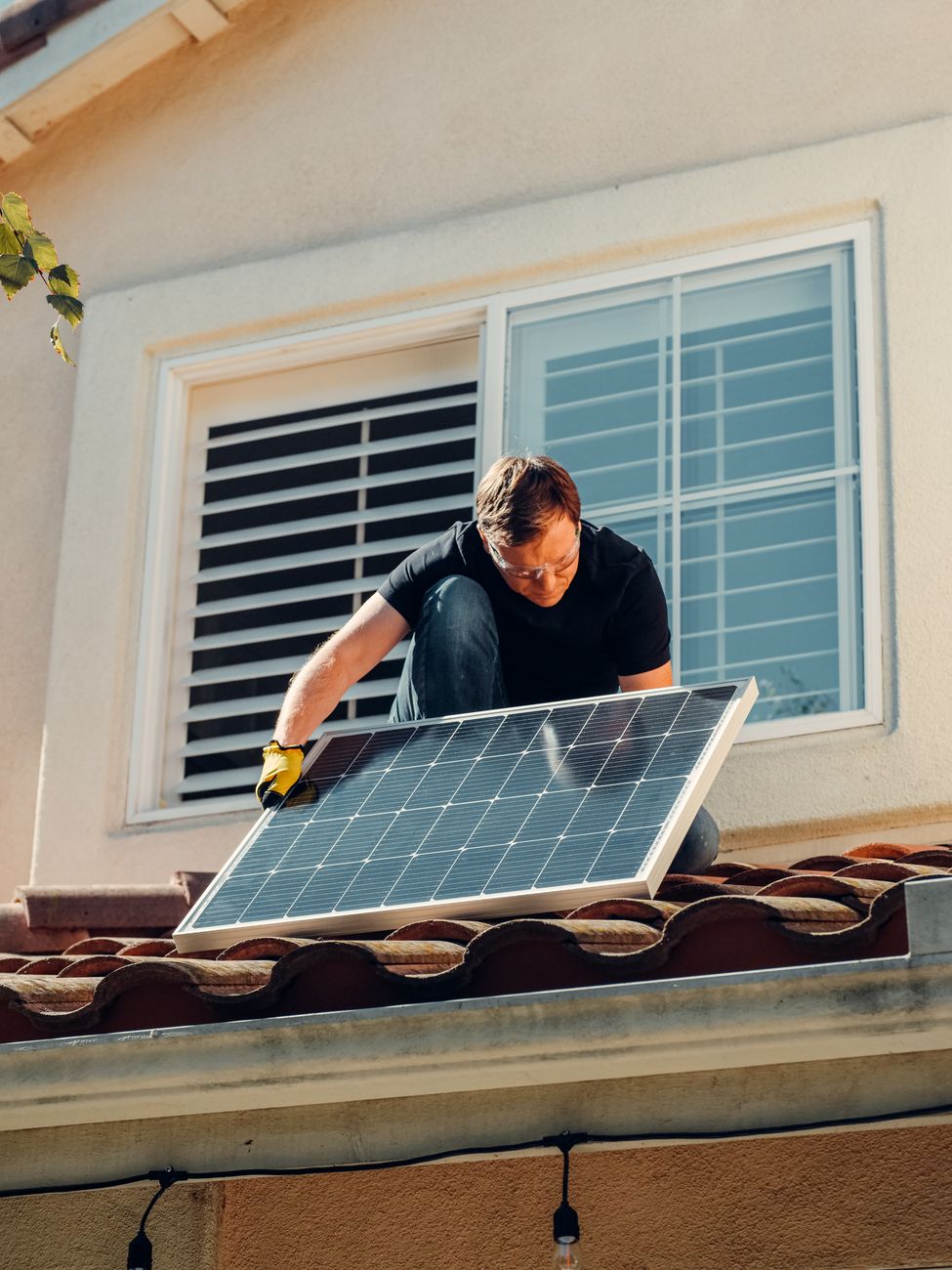
A new bill could allow Californians to install small plug-in solar systems without utility approval, potentially expanding access to renewable energy for renters and households without suitable rooftops.
California lawmakers have passed legislation that could make it significantly easier for households to generate their own solar power from balconies, backyards and other small spaces.
The Plug and Play Solar Act, Senate Bill 868, was approved with bipartisan support and now awaits action from Governor Gavin Newsom. If it is signed, or allowed to become law without a signature or veto within the required 30-day period, the measure would take effect on January 1, 2027.
The legislation would allow households to install plug-in solar systems of up to 1,200 watts per residence without going through the utility interconnection process required for larger rooftop solar installations.
The move could open solar power to millions of renters and homeowners who cannot install conventional panels on their roofs.
Solar power without a rooftop
Balcony solar systems are relatively small, modular solar kits designed to generate electricity in places where traditional rooftop installations are impractical.
The panels can be mounted on balconies, terraces, gardens or other suitable locations. Electricity generated by the panels can then be fed into a household through a standard 120-volt outlet, reducing the amount of electricity that needs to be drawn from the grid.
A 400-watt system could supply roughly 14% of the energy consumed by an average apartment, according to the Environmental Working Group, which supported the California legislation.
Supporters see the technology as a way to make distributed solar more accessible, particularly for people living in apartments or rental properties.
Traditional rooftop solar can involve significant installation costs, property constraints, permitting requirements and utility interconnection procedures. Plug-in systems are designed to lower those barriers.
California follows a growing trend
California’s move comes as interest in balcony solar expands across the United States.
More than half of US states have considered legislation related to plug-in solar over the past year. Colorado, Connecticut, Maine, Maryland, New Hampshire, Utah, Vermont and Virginia have already adopted laws allowing some form of balcony or plug-in solar.
New York also passed similar legislation in June, although its implementation remains dependent on action by the governor.
California’s much larger population and electricity market could give the technology a major boost if the legislation becomes law.
Manufacturers could also gain an incentive to develop products specifically designed to meet the state’s requirements, potentially helping plug-in solar move further into the mainstream.
Safety rules could slow the rollout
Despite its potential, the California legislation comes with significant restrictions.
The systems permitted under the law would have to be certified as safe by a nationally recognised testing laboratory.
That requirement could initially make it difficult for consumers to purchase compliant systems.
Safety company UL Solutions began testing plug-in solar systems this year under its UL 3700 standard, but no product had received certification under the standard at the time of the legislation’s passage.
The requirement is stricter than approaches adopted in some other states, where individual components of a plug-in solar kit can be required to meet safety standards rather than the complete system being certified as a single unit.
Critics of the stricter approach argue that it could delay the availability of genuinely do-it-yourself systems, particularly for renters who are among the groups most likely to benefit from balcony solar.
The existing safety standard can also involve electrician participation, potentially limiting the convenience promised by the concept of plug-and-play solar.
Industry and environmental advocates expect safety standards to evolve as the technology becomes more established, potentially allowing simpler systems to qualify in the future.
A temporary window for plug-in solar
Another important feature of the California legislation is that the new rules would not be permanent in their current form.
The exemption from utility approval would expire on January 1, 2030.
After that date, households would once again need utility approval before installing plug-in solar systems without going through the standard interconnection process.
The sunset provision is likely to become an important issue as California evaluates the technology’s safety, reliability and impact on the electricity grid.
The legislation could therefore create a three-year period in which the state can assess how plug-in solar performs at scale before deciding whether to extend or modify the rules.
What it could mean for renters
One of the biggest potential impacts could be on renters.
Rooftop solar is often difficult or impossible for tenants to install because they do not own the building or control its roof. Apartment residents may also lack access to shared solar programmes or suitable rooftop space.
Balcony solar offers a smaller-scale alternative.
Because the systems can be installed in individual living spaces, they could allow tenants to generate at least part of their own electricity without making major structural changes to a building.
Even modest generation could become valuable as household electricity costs rise and consumers look for ways to reduce their dependence on grid electricity.
A new model for household solar
California’s legislation reflects a broader shift in how renewable energy is being considered.
For decades, residential solar largely meant installing large photovoltaic arrays on rooftops. The emerging plug-in model instead treats solar panels as smaller, modular appliances that households can deploy where space and circumstances allow.
That could make distributed generation more flexible, but it also raises questions about electrical safety, grid management, installation standards and consumer protection.
California’s experience could provide an important test case.
If the systems can be deployed safely and at scale, plug-in solar could become another tool for expanding access to renewable energy. If regulatory and technical barriers remain too high, the technology may struggle to achieve the rapid growth its supporters anticipate.
For now, California is poised to become one of the world’s largest markets where households can potentially generate solar electricity from a balcony, backyard or other small space without first securing utility approval.
The next step rests with the governor. If the legislation takes effect, 2027 could mark the beginning of a new chapter in California’s residential solar market — one where generating clean electricity does not necessarily require owning a roof.




 PARYAWARAN
Leave a comment