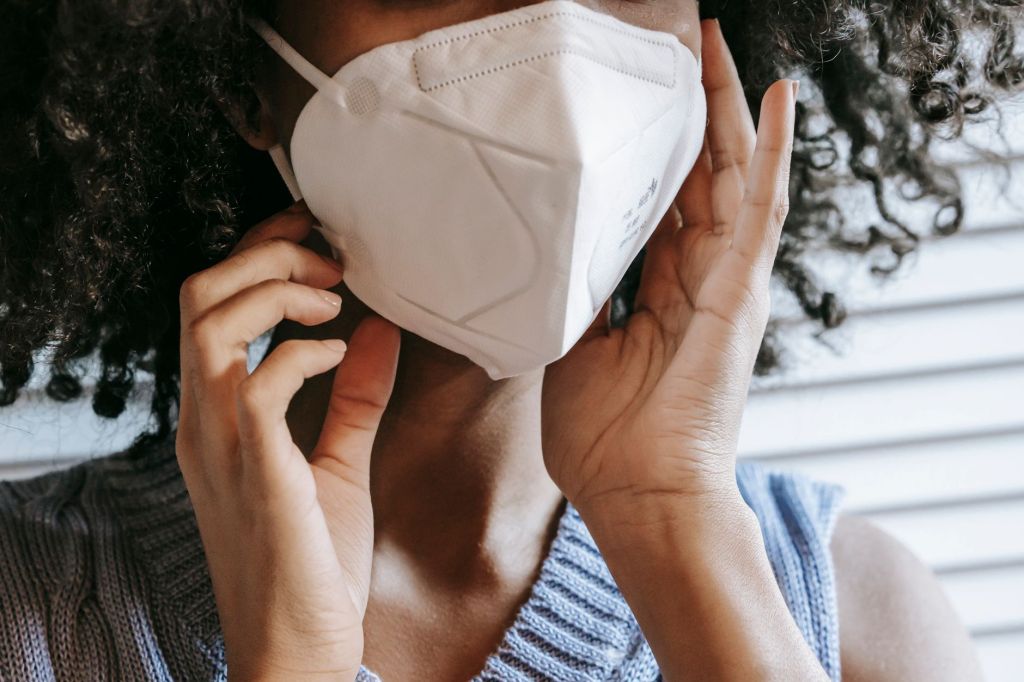
As wildfires spread across parts of the United States and smoke drifts far beyond fire zones, communities are increasingly turning to grassroots networks to protect themselves from dangerous air pollution. Clean Air Clubs and mutual-aid groups are stepping in with masks, air purifiers and practical support where official responses often fall short.
In northern California, prolonged wildfire smoke has become an increasingly familiar part of daily life for rural communities. Residents have spent days under hazy skies as nearby fires burn and smoke from major wildfires in neighbouring states moves across the region.
For communities with limited resources, the health risks are particularly serious. Wildfire smoke contains fine particles that can penetrate deep into the lungs and affect the cardiovascular and respiratory systems. Older adults, children and people with existing respiratory conditions are especially vulnerable. Studies have also found significant increases in asthma-related hospitalisations during periods of heavy smoke.
Faced with these risks, local residents are drawing on networks that were originally created during the Covid-19 pandemic. Mutual-aid groups that once distributed masks, protective equipment and Covid tests are now adapting their work to address wildfire smoke.
One such initiative in Mendocino County, California, has partnered with local businesses to make appropriate protective masks available to residents. Organisers have focused on educating people about the differences between mask types, emphasising that N95 respirators provide substantially better protection against fine airborne particles than cloth or basic surgical masks.
The effort is part of a broader international network of more than 40 Clean Air Clubs. These community-led groups were initially established to provide access to portable air purifiers and protective equipment during the pandemic. Their resources are now being redirected towards another growing public health threat: worsening air quality caused by wildfires.
The model is straightforward. Community groups maintain lending libraries of air purifiers that residents can borrow during periods of dangerous air pollution. They also distribute high-quality masks and help people understand local air-quality conditions.
In Chicago, for example, a community lending library with a limited number of air purifiers was made available to residents when wildfire smoke affected the city. After organisers encouraged people experiencing the effects of the smoke to reserve the machines, the available units were quickly claimed.
The approach offers one major advantage – speed. Because the networks operate outside traditional bureaucratic systems, organisers can move equipment directly into affected communities without waiting for lengthy administrative processes.
That flexibility can be particularly important during sudden smoke events, when air quality can deteriorate within hours and vulnerable residents may not have the money to purchase expensive air filtration equipment.
Other mutual-aid networks have adopted similar approaches. Mask distribution groups have supplied hundreds of thousands of masks during severe wildfire events, including major fires in California. Masks have also been delivered to community centres, local businesses and grassroots organisations so residents can access them without travelling long distances.
On the US East Coast, wildfire smoke originating from Canada has also prompted community action. Volunteers have taken protective masks directly into neighbourhoods, distributing them to people who may not realise that apparently ordinary outdoor air has become hazardous.
The community response is not limited to distributing supplies. Organisers are also working to improve public awareness. Many residents remain unfamiliar with the specific health risks associated with wildfire smoke or do not know which types of masks provide meaningful protection.
In rural and under-resourced areas, the need for accessible information is particularly important. Residents often work outdoors or depend on physically demanding jobs, making it difficult to avoid exposure. Missing work because of illness can also create serious financial consequences for households with limited economic security.
Community organisers therefore frame clean-air protection as an issue of everyday resilience. Preventing exposure can help residents remain healthy, continue working and protect vulnerable family members during periods when smoke makes outdoor activity dangerous.
The networks have also created a sense of solidarity. Many of the volunteers involved already developed relationships with their neighbours during the Covid-19 pandemic. Those connections have made it easier to respond collectively when wildfire smoke arrives.
The experience demonstrates how infrastructure created for one crisis can be adapted to another. Networks established to respond to an infectious disease outbreak are now helping communities cope with a climate-related disaster.
Wildfire seasons are becoming an increasingly persistent threat across the United States, exposing communities far from the actual flames to hazardous air pollution. Smoke can travel hundreds or even thousands of kilometres, turning distant wildfires into local public-health emergencies.
For many residents, community-led initiatives provide an immediate layer of protection while governments and public agencies struggle to keep pace with increasingly frequent disasters.
Clean Air Clubs and Mask Blocs cannot replace public investment in wildfire prevention, air-quality monitoring, healthcare or climate adaptation. However, they demonstrate how communities can organise quickly, share resources and protect vulnerable people when conventional systems are overwhelmed.
The growing movement also offers a broader lesson in disaster preparedness – resilience does not always begin with large institutions. Sometimes it develops through neighbours sharing equipment, businesses distributing masks and volunteers making sure that people who cannot afford protection are not left behind.
As wildfire smoke becomes a recurring feature of life in many parts of the country, such community networks are evolving from emergency responses into an important form of local climate resilience.
 PARYAWARAN
Leave a comment