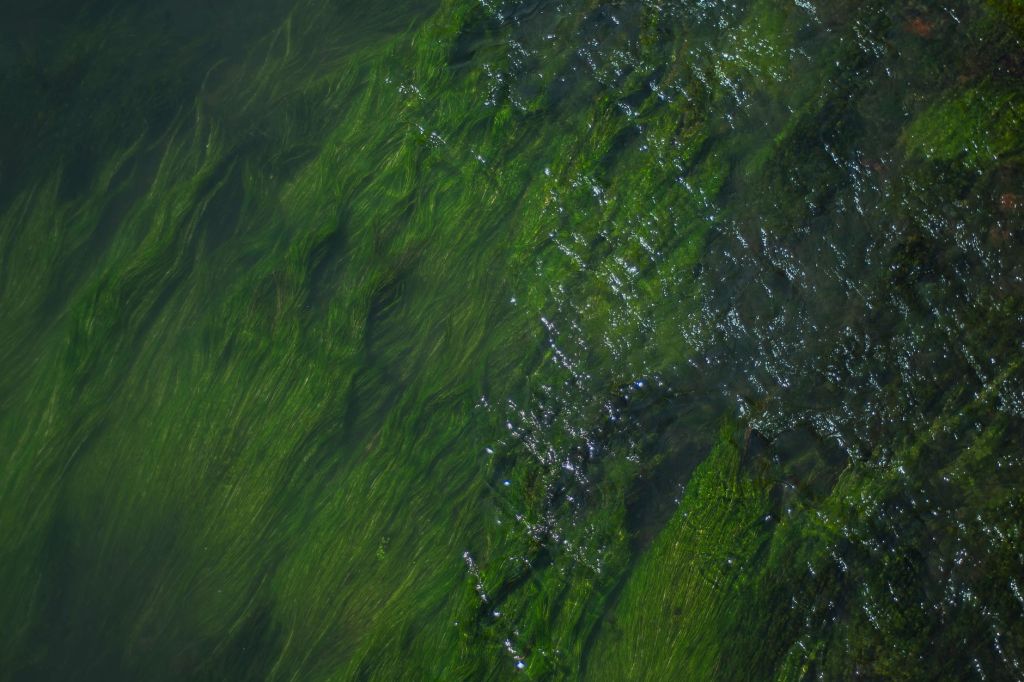
Researchers develop modified cyanobacteria that can capture microplastics while simultaneously removing nitrogen and phosphorus from contaminated water
Researchers at Texas A&M University have developed genetically engineered cyanobacteria capable of removing more than 90% of tested microplastic particles from wastewater while simultaneously reducing major nutrient pollutants, according to a study published in Nature Communications.
The biological approach could offer a new way of tackling two growing environmental challenges at the same time: persistent microplastic contamination and excessive nutrients in wastewater. Unlike conventional treatment systems, which often struggle to capture very small plastic particles, the engineered microorganisms are designed to bind directly to hydrophobic plastics and aggregate them into larger clusters that can be separated from water.
The research focuses on Synechococcus elongatus, a photosynthetic cyanobacterium that was genetically modified to produce limonene, the compound responsible for the characteristic scent of citrus peels.
Using the chemistry of orange peels
The researchers used a relatively simple chemical principle to make the cyanobacteria interact with microplastics.
Limonene is hydrophobic, meaning it tends to repel water. Many common plastics, including polystyrene, also have hydrophobic surfaces. By engineering the cyanobacteria to produce limonene, the researchers enabled the cells to interact with and attach to microplastic particles.
Once attached, the bacteria and plastic form larger aggregates that can settle out of the water, making it easier to separate the contaminated biomass from the treated wastewater.
In laboratory experiments, the engineered cyanobacteria achieved a 91.4% removal rate for polystyrene particles measuring between 200 and 800 nanometres. Removal efficiency for the smallest particles tested, around 200 nanometres, was approximately 80%.
The ability to target particles at this scale is significant because conventional wastewater treatment processes are generally more effective at removing larger particles. Very small microplastics can pass through treatment systems and subsequently enter rivers, lakes and coastal waters.
More than a microplastic filter
The researchers found that the engineered cyanobacteria could perform several wastewater treatment functions simultaneously.
According to the study, the system removed between 47% and 99% of nitrates, almost all ammonia and nearly all phosphates under the tested conditions.
Excess nitrogen and phosphorus are major pollutants in wastewater because they can stimulate excessive algal growth when discharged into natural water bodies. Such nutrient enrichment can contribute to eutrophication, alter aquatic ecosystems and reduce oxygen levels in affected waters.
Combining microplastic capture with nutrient removal could therefore make the biological system potentially useful beyond plastic pollution alone.
The approach also produces a biomass containing the captured plastic. Researchers suggested that this material could potentially be processed into reinforced bioplastic films, creating an opportunity to recover value from what would otherwise be a waste stream.
A potential alternative to physical filtration
Microplastic removal is currently being investigated through a range of physical, chemical and biological approaches.
One emerging method involves magnetic nanoparticles that attach to plastic particles and allow them to be extracted using magnetic fields. While some laboratory studies have reported removal efficiencies of up to 85%, the technique creates an additional challenge because the nanoparticles themselves must be completely recovered from the treated water.
Biological processes already capture some microplastics incidentally. In conventional wastewater plants, larger particles can become trapped in activated-sludge flocs and subsequently removed. However, there is currently no widespread biological treatment system specifically engineered to target extremely small microplastics.
The Texas A&M approach attempts to address this gap by using microorganisms that actively interact with the plastic particles rather than relying primarily on conventional filtration or sedimentation.
Its ability to remove nutrients at the same time could also potentially reduce the need for separate treatment stages.
From laboratory to treatment plant
Despite the promising laboratory results, the technology remains at an early stage and significant challenges must be overcome before it can be deployed at municipal wastewater treatment plants.
One of the most important questions is whether the engineered cyanobacteria will perform effectively in real wastewater. Laboratory experiments generally use controlled concentrations and defined types of plastic particles. Actual municipal wastewater is considerably more complex and can contain different plastic polymers, detergents, pharmaceuticals, organic matter and microorganisms that could interfere with the process.
Scaling up the technology is another major challenge.
A reactor capable of treating wastewater at the scale of a municipal treatment facility would be vastly more complex than a laboratory system. Treatment plants may process hundreds of thousands of cubic metres of wastewater each day, requiring reliable systems for growing, maintaining and separating the engineered microorganisms.
The use of genetically modified organisms also raises regulatory and environmental questions. Any large-scale application would need safeguards to prevent the uncontrolled release of engineered microorganisms and to ensure that the resulting biomass is safely handled.
In Europe, for example, the contained use of genetically modified microorganisms is governed by specific regulatory requirements, with approval procedures varying according to the application and jurisdiction.
Potentially carbon-negative process
The researchers’ economic analysis estimated production costs of approximately US$3.58 per kilogram of algal biomass. The team has also suggested that operating the process using renewable energy could potentially make the system net carbon-negative.
However, such projections will need to be tested under real-world operating conditions. Energy requirements, biomass harvesting, reactor construction, maintenance and waste management could all influence the eventual environmental and economic performance of the technology.
The research team has indicated that pilot-scale systems could potentially become feasible from around 2028 if sufficient funding is available.
A promising but unproven solution
The development comes as governments and environmental agencies increasingly focus on microplastic pollution and the difficulty of preventing tiny plastic particles from entering aquatic ecosystems.
The European Union has also introduced measures aimed at reducing intentionally added microplastics in consumer and industrial products, increasing attention on technologies capable of capturing plastics that are already present in the environment.
The Texas A&M study does not yet demonstrate that engineered cyanobacteria can replace existing wastewater treatment technologies. Rather, it provides laboratory evidence for a biological mechanism that could potentially combine microplastic removal and nutrient treatment in a single process.
Further testing in real wastewater, larger pilot facilities and rigorous assessment of environmental safety will be necessary before the technology can move from the laboratory into municipal treatment plants.
If those challenges can be overcome, engineered cyanobacteria could provide an unusual new tool for wastewater treatment—one that uses biology not only to capture some of the smallest plastic particles, but also to remove nutrients that can damage freshwater ecosystems.




 PARYAWARAN
Leave a comment