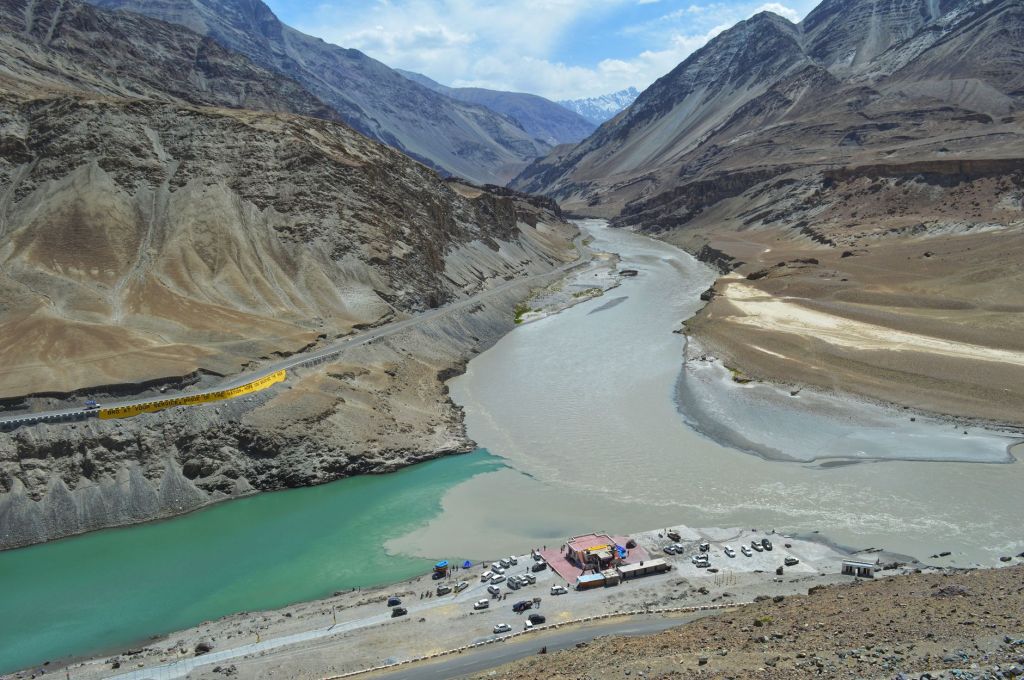
India’s rejection of a Hague arbitration ruling deepens an already fragile water relationship with Pakistan, raising questions about regional stability, climate resilience, food security and the future of one of the world’s most important transboundary river systems.
The latest confrontation over the Indus Waters Treaty is no longer simply a dispute about the interpretation of a six-decade-old agreement.
It is increasingly becoming a test of whether India and Pakistan can manage a shared river system at a time when climate change is making water less predictable, population pressures are increasing demand and relations between the two nuclear-armed neighbours remain deeply strained.
India has rejected a Hague-based Court of Arbitration ruling that the 1960 Indus Waters Treaty remains in force, maintaining that the tribunal was improperly constituted and had no jurisdiction over India’s sovereign decisions.
Pakistan has taken the opposite position, insisting that the treaty remains binding.
The disagreement leaves the future of one of the world’s longest-running water-sharing arrangements increasingly uncertain.
A treaty under geopolitical pressure
The Indus Waters Treaty survived wars, political crises and decades of hostility between India and Pakistan.
Its basic framework divided the six rivers of the Indus system between the two countries. India received primary rights over the eastern rivers — Ravi, Beas and Sutlej — while Pakistan received rights over the western rivers — Indus, Jhelum and Chenab. India retained limited rights to use the western rivers, including for specified hydropower projects.
The arrangement was never designed to eliminate political conflict. Instead, it created a relatively narrow institutional framework through which the two countries could manage their water interests despite broader disagreements.
That framework is now under severe pressure.
India placed the treaty in abeyance in 2025 following the deadly attack in Indian-administered Kashmir and amid heightened accusations of cross-border terrorism. Pakistan rejected India’s position.
The subsequent arbitration dispute has therefore become part of a much larger strategic confrontation.
Water is no longer merely a shared resource. It has become another instrument through which political pressure, national security and diplomatic leverage are being contested.
Climate change is changing the equation
The timing of the dispute is particularly significant because the Indus basin is undergoing major environmental changes.
The river system depends heavily on a combination of Himalayan snow and glacier melt, seasonal rainfall and monsoon precipitation. Climate change is altering all three components.
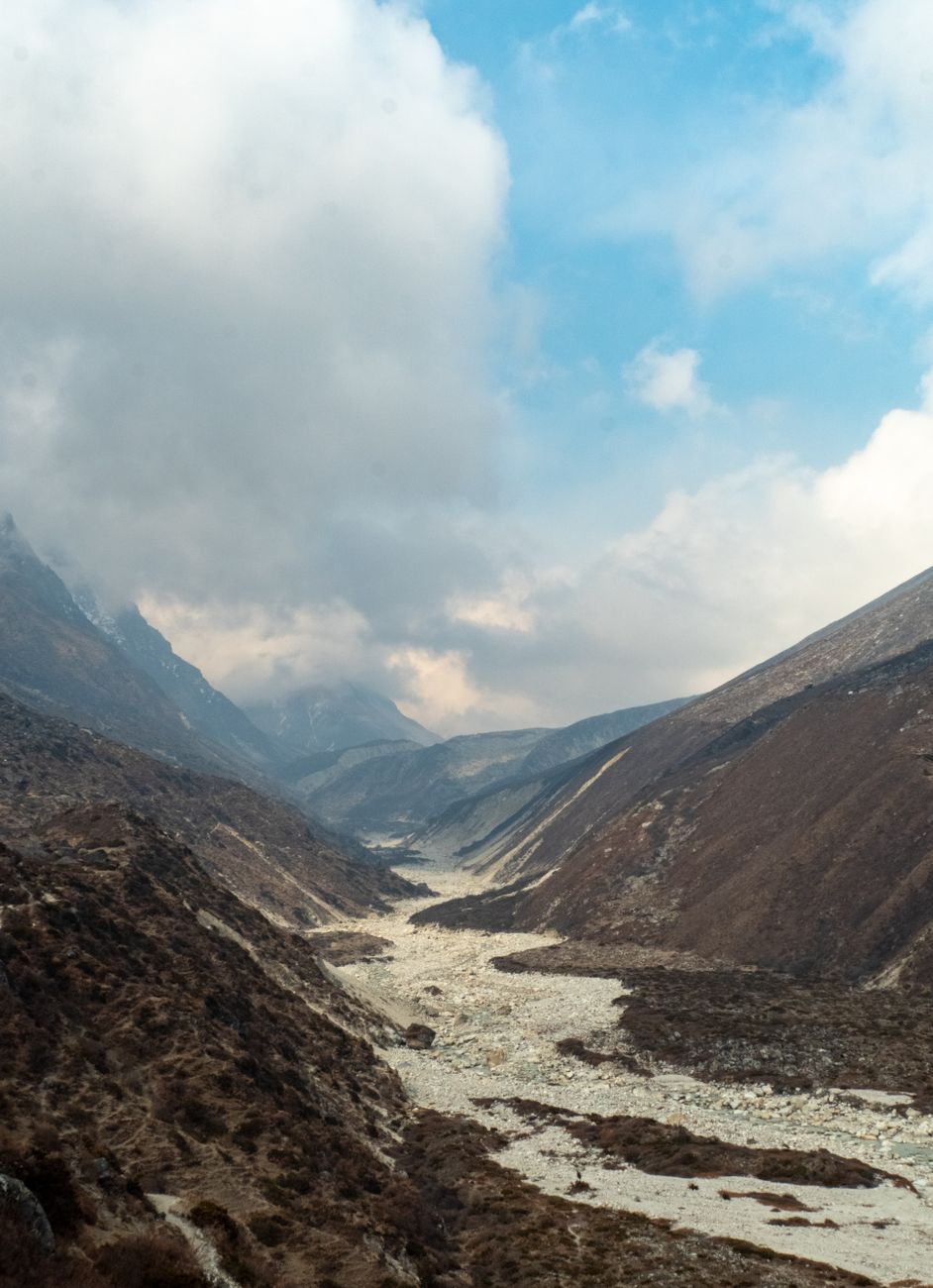
Rising temperatures are accelerating glacier and snow melt in parts of the Himalayas. In the short term, increased melting can contribute to higher flows and greater flood risks. Over longer periods, continued glacier loss can reduce the natural water storage that mountain ice provides.
At the same time, rainfall is becoming more erratic.
More intense precipitation can produce destructive floods without necessarily improving water availability throughout the year. Longer dry periods can increase pressure on irrigation systems and groundwater.
This creates a fundamental contradiction: the region can experience both too much water and too little water within the same climate system.
A treaty designed primarily around allocation of river waters cannot, by itself, resolve these increasingly complex climate risks.
The environmental cost of treating rivers as strategic assets
The Indus river system is more than a pipeline carrying water between two countries.
Its rivers sustain wetlands, floodplains, fisheries, agricultural landscapes and ecosystems across a vast region.
Changes in the timing, volume and variability of river flows can affect aquatic biodiversity and sediment movement, alter wetlands and disrupt ecological processes downstream.
Large dams, hydropower projects and water-diversion infrastructure can also modify natural river flows and sediment transport.
India’s right to develop hydropower on the western rivers has long been a source of disagreement with Pakistan. The dispute has traditionally focused on whether specific projects comply with treaty provisions.
But the climate crisis introduces another dimension.
Future infrastructure decisions will need to account not only for treaty rules and national energy requirements but also for changing precipitation patterns, extreme floods, glacier dynamics, ecosystem needs and downstream environmental impacts.
The central question is therefore becoming larger than who gets how much water.
It is also about what happens to the river itself.
Pakistan’s vulnerability is particularly acute
Pakistan is heavily dependent on the Indus river system.
Agriculture, drinking water, livestock and rural livelihoods across large parts of the country depend on reliable flows from the Indus and its tributaries. Punjab and Sindh, in particular, rely heavily on irrigation supported by the river system.
Any prolonged uncertainty over water availability could therefore have consequences far beyond diplomacy.
Reduced or unpredictable flows could affect crop production, food prices, rural incomes and employment. Water shortages could increase competition between provinces, communities and sectors.
The social consequences could be particularly severe for small farmers and poorer households that have fewer resources to adapt.
For Pakistan, the Indus is therefore not simply a river system. It is a foundation of economic and social stability.
India also faces growing water risks
The dispute should not be viewed solely through the lens of India’s leverage over Pakistan.
India itself faces increasingly severe water challenges.
Rapid urbanisation, population growth, agricultural demand, groundwater depletion and climate variability are placing pressure on water resources across the country.
The Himalayan river systems are especially important because they provide water to some of the world’s most densely populated regions.
Any long-term strategy based on greater control over transboundary rivers would therefore need to consider India’s own ecological and economic vulnerabilities.
Building large reservoirs and diversion systems is neither immediate nor straightforward. Himalayan geography, seismic risks, environmental impacts, land acquisition, financing and construction timelines all impose constraints.
India may possess significant geographical leverage as the upper riparian country, but geographical position does not automatically translate into immediate control over river flows.
The social consequences could extend beyond borders
Water insecurity rarely remains confined to government negotiations.
When water becomes scarce, its effects are felt through food prices, agricultural employment, migration, public health and household incomes.
Communities dependent on irrigated agriculture are particularly exposed.
In Pakistan, uncertainty surrounding the Indus could intensify existing tensions between upstream and downstream provinces and between agricultural, urban and industrial users.
In India, climate-driven changes in Himalayan water availability could similarly affect farming communities and cities dependent on river systems.
The most vulnerable populations are likely to have the fewest alternatives.
This makes water security increasingly inseparable from social security.
A dangerous precedent for transboundary rivers
The Indus dispute also matters beyond South Asia.
Thousands of rivers cross international borders worldwide. Many of these basins are already under pressure from climate change, population growth and competing development needs.
If political disputes increasingly lead countries to suspend or challenge established water-sharing arrangements, the consequences could extend far beyond individual river basins.
The international system depends heavily on the principle that agreements governing shared natural resources provide a degree of predictability even when political relations deteriorate.
The Indus Waters Treaty has historically been regarded as an example of such institutional resilience.
Its weakening could therefore become an important precedent for other water-stressed regions.
The treaty may need evolution, not simply confrontation
The central weakness of the current confrontation is that both countries are increasingly approaching the Indus system through separate strategic lenses.
India is concerned about security, terrorism, sovereign decision-making, energy development and the limitations of a treaty negotiated more than six decades ago.
Pakistan is concerned about water security, downstream dependence, treaty obligations and the possibility of losing predictability over its most important river system.
Climate change sits between these competing positions.
Neither country can control the Himalayan climate. Neither can predict precisely how precipitation, glacier melt and river flows will evolve over coming decades.
That uncertainty makes cooperation more valuable, not less.
A modernised water framework could potentially address issues that were less prominent in 1960: climate variability, ecological flows, groundwater interactions, extreme floods, data sharing, early-warning systems, sediment management and changing energy needs.
But such reform requires political trust — precisely what is in shortest supply.
The real risk is uncertainty
For now, the most immediate consequence of the dispute may not be a sudden physical interruption of the Indus.
India lacks the infrastructure to simply shut off the western rivers, and major storage or diversion projects would require years of construction and substantial investment.
The greater immediate danger is strategic uncertainty.
When two hostile neighbours share rivers that millions depend upon, uncertainty itself can become destabilising.
Farmers cannot plan around diplomatic disputes. Cities cannot negotiate with droughts. Wetlands cannot wait for arbitration. Ecosystems cannot distinguish between political boundaries.
And climate change will not pause while India and Pakistan argue over the legal status of a treaty.
The Indus crisis is therefore evolving into something much larger than a disagreement over international law.
It is a warning about what happens when an old water-sharing framework collides with a new era of geopolitical hostility, environmental stress and climate uncertainty.
The future of the Indus may ultimately depend not on which country wins the legal argument, but on whether both countries can find a way to ensure that a shared river remains a source of life rather than another front in a deepening conflict.


 PARYAWARAN
Leave a comment