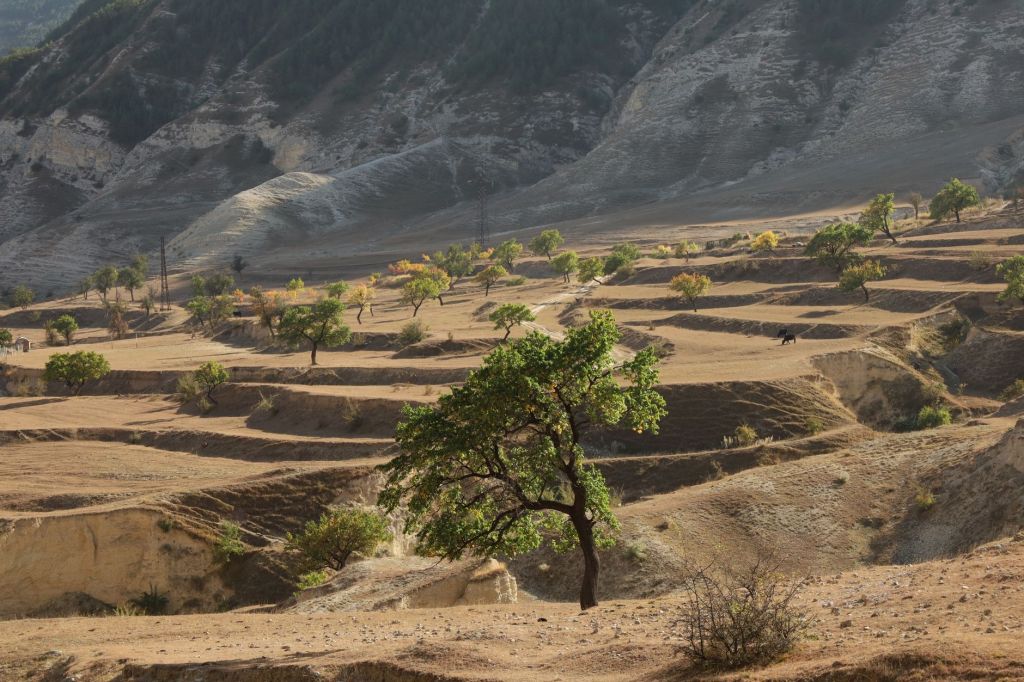
Scientists and experts warn that worsening soil degradation is threatening food systems, while fragmented policies continue to treat land health and nutrition as separate issues.
The 17th Conference of the Parties to the United Nations Convention to Combat Desertification (UNCCD COP17) has highlighted the growing connection between soil health, food security and human nutrition, with scientists warning that deteriorating soils could undermine the foundations of global food production.
At Food Systems and Soil Health Day on August 27, experts stressed that around 95 per cent of the food consumed globally depends directly or indirectly on soil. Yet soils in many parts of the world are being degraded faster than they can recover, while policies and financial systems continue to address agriculture, nutrition, climate and land management largely as separate sectors.
A new assessment released by the Food and Agriculture Organization (FAO) at COP17 showed that soil degradation remains widespread and is worsening across many regions. The report found that more than half of the regional assessments reviewed recorded low or very low adoption of sustainable soil management practices.
Around 58 per cent of the assessments indicated that soil conditions had deteriorated since 2015, while only about 10 per cent reported improvements.
Soil erosion emerged as the most significant global concern. Around 81 per cent of regional assessments rated erosion management as poor or very poor, while 65 per cent reported that erosion conditions were deteriorating.
The findings underline the growing pressure on agricultural land as food demand increases and farming systems become increasingly dependent on intensive cultivation and external inputs.
India faces major soil degradation challenges
South Asia is among the regions facing particularly serious soil degradation. India accounts for the largest share of degraded land in the region, with different studies cited by the FAO assessment estimating that roughly 30 to 37 per cent of the country’s land area is degraded.
Water erosion alone affects approximately 83 million hectares, or around 11 per cent of India’s land area. The country is estimated to lose between 4.8 billion and 5.3 billion tonnes of soil every year through erosion, carrying away approximately eight million tonnes of plant nutrients. Around 29 per cent of the eroded soil is estimated to be permanently lost to the sea.
The situation is particularly significant in South Asia, home to roughly 1.9 billion people. In many parts of the region, soil is being depleted more rapidly than natural processes can restore it.
Intensive agriculture and heavy dependence on fertilisers can maintain crop yields in the short term but may contribute to declining soil quality when nutrients are applied in imbalanced quantities or when organic matter and other aspects of soil health are neglected.
Fertiliser subsidies under scrutiny
The FAO assessment also identifies fertiliser use and agricultural subsidies as important factors behind the problem.
India, Bangladesh and Pakistan are classified as having unsustainably high nitrogen surpluses, meaning that substantially more nitrogen is being applied to agricultural land than crops can absorb.
India also has relatively low nitrogen-use efficiency. Only around 30 to 45 per cent of applied nitrogen is taken up by crops, compared with a global average of approximately 59 per cent.
A major factor is the structure of fertiliser subsidies. Nitrogenous urea receives substantial support in several South Asian countries, including India. This can encourage farmers to favour urea even when their fields require a more balanced combination of nutrients.
The result can be continued nutrient imbalance, inefficient fertiliser use and increased environmental pressure without necessarily producing corresponding improvements in agricultural productivity.
Agricultural subsidies globally represent hundreds of billions of dollars in public expenditure each year. Experts at COP17 argued that a significant proportion of existing support continues to incentivise production-oriented practices rather than long-term soil health and environmental sustainability.
The challenge is particularly difficult because many subsidy programmes were introduced decades ago to increase agricultural production, raise farm incomes and improve food security. Over time, however, these systems have become deeply embedded in agricultural economies and can be difficult for governments to reform.
Bridging the soil and nutrition divide
The discussions at COP17 also focused on an often-overlooked connection between soil quality and human nutrition.
The nutrients available in agricultural soils influence the nutritional composition of crops, meaning that declining soil fertility and micronutrient depletion can have implications beyond agricultural productivity. Despite this connection, nutrition policy has traditionally focused more heavily on food access, dietary diversity, supplementation and fortification than on the condition of the soils from which food originates.
Scientists and policy experts argued that this separation reflects institutional divisions rather than a lack of scientific understanding.
Agriculture, land management, nutrition, climate and biodiversity are frequently addressed by different ministries, institutions and professional disciplines. As a result, scientific evidence about the connections between healthy soils, nutritious food and human health does not always translate into integrated policymaking.
COP17 discussions therefore emphasised the need for governments to bring these policy areas together and incorporate soil health into national strategies for agriculture, climate adaptation, biodiversity and food security.
Redirecting finance towards sustainable land management
Financial constraints remain a major obstacle. Governments around the world are facing pressure on public finances, making it difficult to rely entirely on public expenditure to restore degraded land at the required scale.
The discussions consequently focused on redirecting existing agricultural support rather than simply creating new sources of funding.
A World Bank estimate cited during the discussions suggested that governments spend approximately $600 billion to $900 billion annually on agricultural support, with more than 80 per cent potentially working against environmental or social objectives.
Reforming these financial flows could provide a significant opportunity to support soil restoration, sustainable farming and climate-resilient food systems without requiring equivalent levels of new public spending.
COP17 also highlighted international initiatives aimed at improving coordination and mobilising investment. Joint FAO-UNCCD guidance released during the conference encouraged governments to integrate soil and land considerations into agricultural, climate and biodiversity planning.
The Global Flagship Initiative on Food Security, launched at COP16 in Riyadh in 2024, also announced an expanded partnership between UNCCD and the Crop Trust. The initiative now has more than 140 members, including governments, United Nations agencies, development banks and non-governmental organisations.
It aims to work with at least 40 national governments, improve management across more than 100 million acres of farmland and mobilise more than $10 billion in investment, with a strong focus on attracting private capital.
The initiatives represent early attempts to address the fragmented approach to land and food systems. However, scientists at COP17 stressed that reversing soil degradation will require sustained changes in agricultural practices, subsidies, investment and government planning.
The central message emerging from the discussions was that food security cannot be separated from the health of the land that produces food. As soils continue to degrade, treating agriculture, nutrition and land management as independent policy areas risks addressing symptoms while overlooking one of the foundations of the global food system.



 PARYAWARAN
Leave a comment