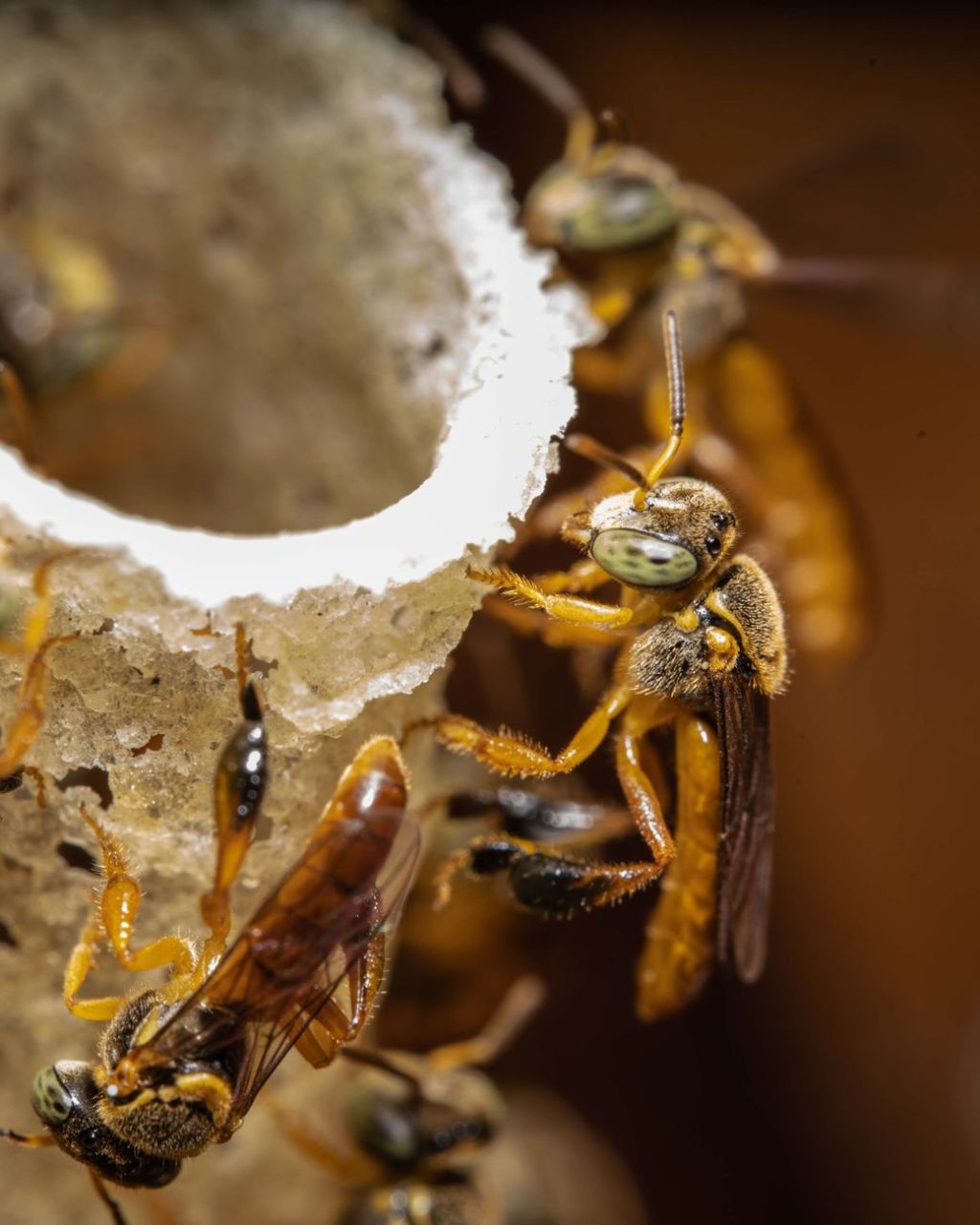
In the forests on the outskirts of São Paulo, Brazil, Indigenous knowledge is helping protect one of the country’s most important groups of pollinators. The Guarani community is caring for native stingless bees, preserving traditional knowledge while safeguarding species increasingly threatened by habitat loss, pesticides and climate change.
Among the community’s conservation practices is meliponiculture—the traditional keeping and management of stingless bees. Unlike conventional beekeeping, which commonly involves European honeybees, meliponiculture focuses on Brazil’s diverse native bee species and uses specialised techniques passed down through generations.
A Guarani beekeeper in the Jaraguá Indigenous Territory regularly tends to colonies of native bees, including Mirim and Jataí species. The work involves carefully transferring portions of established colonies into specially constructed wooden hives, allowing new colonies to develop while maintaining the health of the original populations.
The practice requires detailed knowledge of bee behaviour. When a colony is moved, materials containing the scent and pheromones of the original hive are transferred to the new structure. Brood chambers, honey stores and other elements are carefully positioned to encourage the bees to establish themselves in their new home.
The tiny insects emerge in large numbers during the process, creating a silent swarm around the hive. Despite their small size, the bees play an enormous role in maintaining ecosystems and supporting food production.
Brazil is home to around 300 identified species of stingless bees, although scientists believe the actual diversity may be higher. Some species may already have disappeared as natural habitats have been transformed by agriculture, urbanisation and other forms of development.
The threats facing native pollinators extend far beyond Brazil. A major global biodiversity assessment has warned that wild pollinators are under increasing pressure from habitat destruction, pesticide exposure and climate change.
Their decline could have serious ecological and economic consequences. Animal pollinators contribute to the reproduction of about 90% of the world’s wild flowering plants, while approximately three-quarters of global food crops depend at least partly on pollination.
The Atlantic Forest surrounding the Jaraguá Indigenous Territory has suffered extensive habitat loss over generations. Once covering large areas of eastern Brazil, the forest has been heavily fragmented, with urban expansion from São Paulo increasingly surrounding remaining Indigenous and natural areas.
For the Guarani, however, native bees are not simply ecological resources. They are closely connected to culture, tradition and community life.
Stingless bee honey and wax are used in ceremonial practices, giving the insects an important spiritual and cultural role. Knowledge of how to locate, care for and reproduce native bee colonies has traditionally been passed from parents and grandparents to younger generations.
This intergenerational knowledge is now becoming increasingly important as native bee populations face environmental pressures.
The community’s approach combines conservation with cultural continuity. By maintaining bee colonies in managed hives, Indigenous beekeepers can help preserve local species while ensuring that traditional knowledge remains part of everyday community life.
The practice also differs significantly from large-scale commercial honey production. Stingless bees generally produce smaller quantities of honey, but their honey is often valued for its distinctive qualities and cultural importance.
Maintaining diverse native bee species can also contribute to broader ecosystem health. Different bee species have different behaviours, nesting requirements and relationships with flowering plants. Protecting a variety of native pollinators therefore helps maintain ecological processes that cannot always be replaced by commercially managed honeybees.
Among the species cared for by the Guarani, Jataí bees hold particular cultural significance. Their continued presence despite habitat pressures is viewed within the community as a symbol of resilience.
That sense of resilience extends beyond the bees themselves. The Guarani have faced generations of pressure on their lands, culture and traditional ways of life. Protecting native species is therefore intertwined with protecting Indigenous identity and knowledge.
Yet there are concerns about whether younger generations will continue the tradition. Economic pressures can encourage young people to pursue better-paying employment outside traditional activities, potentially weakening the transmission of specialised knowledge.
For Indigenous communities, the challenge is therefore not simply to preserve bee colonies but also to ensure that the knowledge required to care for them survives.
The experience of the Guarani demonstrates the value of Indigenous ecological knowledge in conservation. Generations of close observation have produced practical understanding of local species, seasonal changes, habitats and ecological relationships.
As climate change alters flowering patterns and temperatures, while deforestation and urbanisation continue to fragment habitats, such knowledge can complement scientific research and strengthen conservation strategies.
Protecting native stingless bees ultimately requires protecting the landscapes on which they depend. Forest restoration, reduced pesticide use, habitat conservation and climate adaptation can all contribute to healthier pollinator populations.
The Guarani’s work shows that conservation can also be a cultural practice. By caring for bees, maintaining traditional hives and passing knowledge between generations, the community is protecting both biodiversity and heritage.
In a rapidly changing environment, these small, stingless insects have become powerful symbols of ecological resilience. Their survival depends not only on forests and flowers, but also on communities willing to preserve the knowledge and traditions that have allowed humans and pollinators to coexist for generations.



 PARYAWARAN
Leave a comment