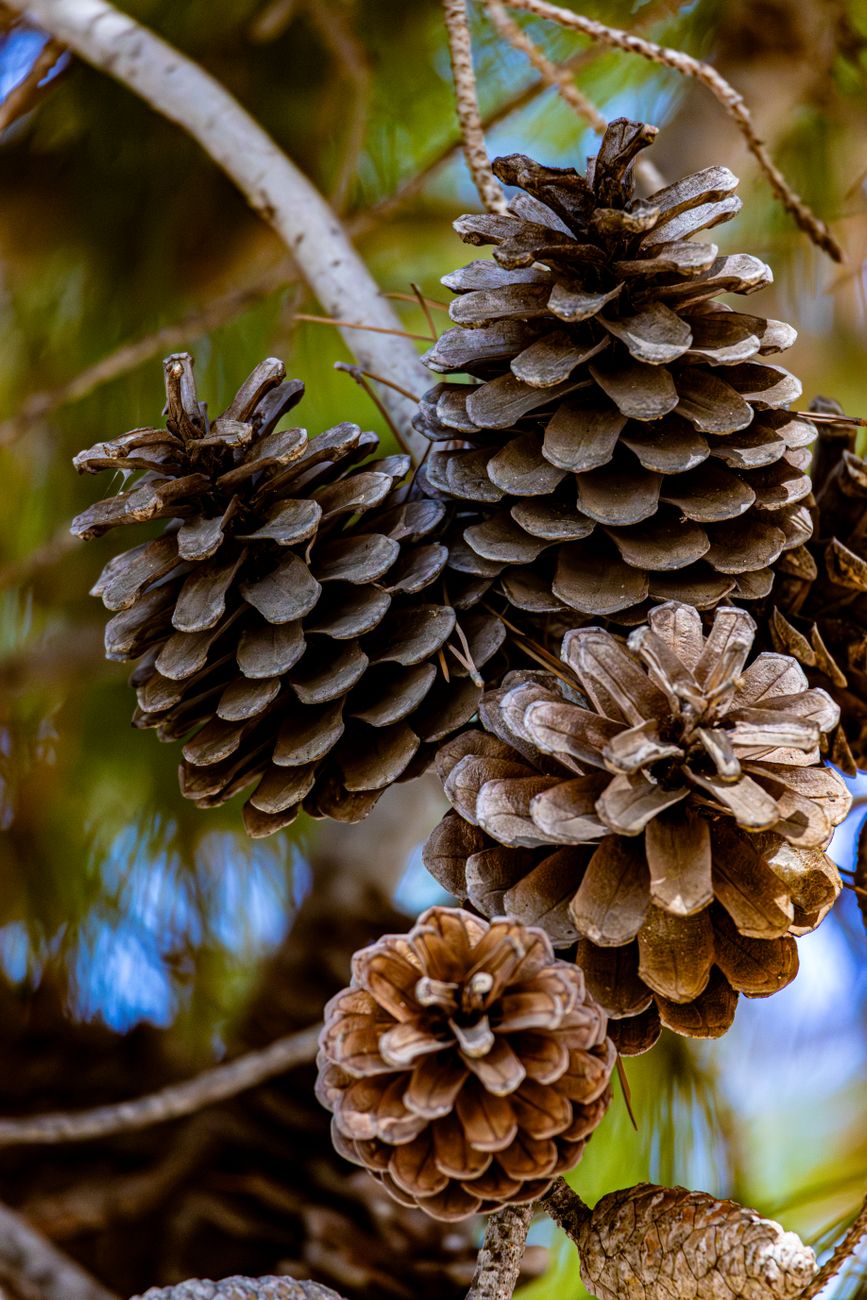
A surprising discovery high in California’s Sierra Nevada is raising new questions about how mountain forests will respond to climate change. Jeffrey pines, normally found at lower elevations, are now growing thousands of feet above their previously known range, potentially bringing new competition and increasing wildfire risks in fragile subalpine ecosystems.
The discovery was made in Sequoia National Park at an elevation of about 12,657 feet, near the upper limit where trees can survive. The tree was a young Jeffrey pine, a species generally associated with warmer, lower-elevation environments.
At such heights, conditions are exceptionally harsh. Strong winds, heavy snow, freezing temperatures and a short growing season restrict tree growth. California’s highest elevations have traditionally been dominated by highly cold-tolerant species such as whitebark pine, limber pine, foxtail pine and bristlecone pine.
The unexpected presence of Jeffrey pines initially appeared to be an isolated curiosity. A subsequent survey, however, found hundreds of the trees on other high-elevation peaks. Some were estimated to be 30 or 40 years old, suggesting that the species has been occupying these extreme environments for decades.
Several trees were found above 4,000 metres, an elevation at which trees had not previously been documented in the United States or Canada outside the southern Rocky Mountains.
The findings suggest that climate change may be allowing Jeffrey pines to survive in locations that were once too cold or snow-covered for them. Warmer temperatures, earlier snowmelt and changing moisture conditions are altering the environmental limits that determine where different tree species can grow.
But climate models may not tell the entire story.
One possible explanation involves Clark’s nutcrackers, birds that play a critical role in spreading the seeds of many mountain pine species. The birds collect seeds from pinecones and bury them in numerous locations as food reserves. They can remember thousands of cache sites, but some buried seeds are never recovered and instead germinate.
This natural seed-dispersal system can move tree species well beyond the immediate area where mature trees grow. Scientists have long recognised the relationship between nutcrackers and high-elevation pines, but seed dispersal has not always been fully incorporated into predictions of how forests will shift under climate change.
The new Jeffrey pine discoveries suggest that birds may be helping the species move uphill much faster than expected.
The trees are still struggling in their new environment. High-elevation Jeffrey pines grow much more slowly than those at lower elevations, and the newly discovered trees have not yet begun producing cones. That means they are currently dependent on continued seed dispersal rather than reproducing independently at these elevations.
As temperatures rise, however, the situation could change. If the trees eventually mature and begin producing seeds at high elevations, their population could expand rapidly. Faster-growing Jeffrey pines could then compete with slower-growing subalpine species for space and resources.
The greatest concern, however, may not be competition but fire.
California has experienced increasingly destructive wildfires in recent decades. Research examining forest losses between 1991 and 2023 found that approximately 8–9% of the state’s conifer forests were lost to wildfire during that period. High-elevation forests have experienced particularly rapid increases in fire-related losses.
Jeffrey pines are well adapted to fire compared with many of the species that currently dominate California’s subalpine forests. Their thick bark provides protection, while their cones and growth patterns help them survive and regenerate following fire. The species is also relatively tolerant of drought.
By contrast, many high-elevation pines have evolved in environments where severe, frequent fires were uncommon. Their widely spaced trees, sparse vegetation and moist, compact litter historically limited the spread of fire.
The arrival and expansion of Jeffrey pines could alter that balance.
Jeffrey pines can create denser vegetation and produce more flammable foliage and ground fuels. As the species spreads into areas previously dominated by widely spaced, slow-growing subalpine trees, it could increase the amount and continuity of combustible material.
This could create a feedback effect in which climate change allows Jeffrey pines to expand into higher elevations, while the expanding trees gradually make those landscapes more favourable to fire. Wildfires could then disproportionately damage species that are less adapted to burning, potentially giving Jeffrey pines an additional advantage.
Such changes are unlikely to transform California’s highest mountains overnight. Some of the Sierra Nevada’s extreme elevations may continue to provide refuge for existing subalpine species for many decades. But the ecological changes already underway suggest that mountain forests are entering an uncertain period.
The discovery also highlights how climate change can produce unexpected ecological outcomes. Scientists may predict that trees will gradually move toward cooler environments as temperatures rise, but the speed and pathways of that movement can be influenced by animals, seed dispersal, topography and changing fire regimes.
The Jeffrey pine’s upward expansion is therefore more than a record of a tree growing at an unusual elevation. It could be an early indication of a broader transformation in California’s mountain ecosystems.
As warming continues, species once confined to lower elevations may increasingly reach the treeline, while fire-adapted trees could gain an unexpected advantage. The result may be a very different high-elevation landscape—one in which the trees best equipped to survive future wildfires are also helping reshape the conditions in which those fires occur.


 PARYAWARAN
Leave a comment