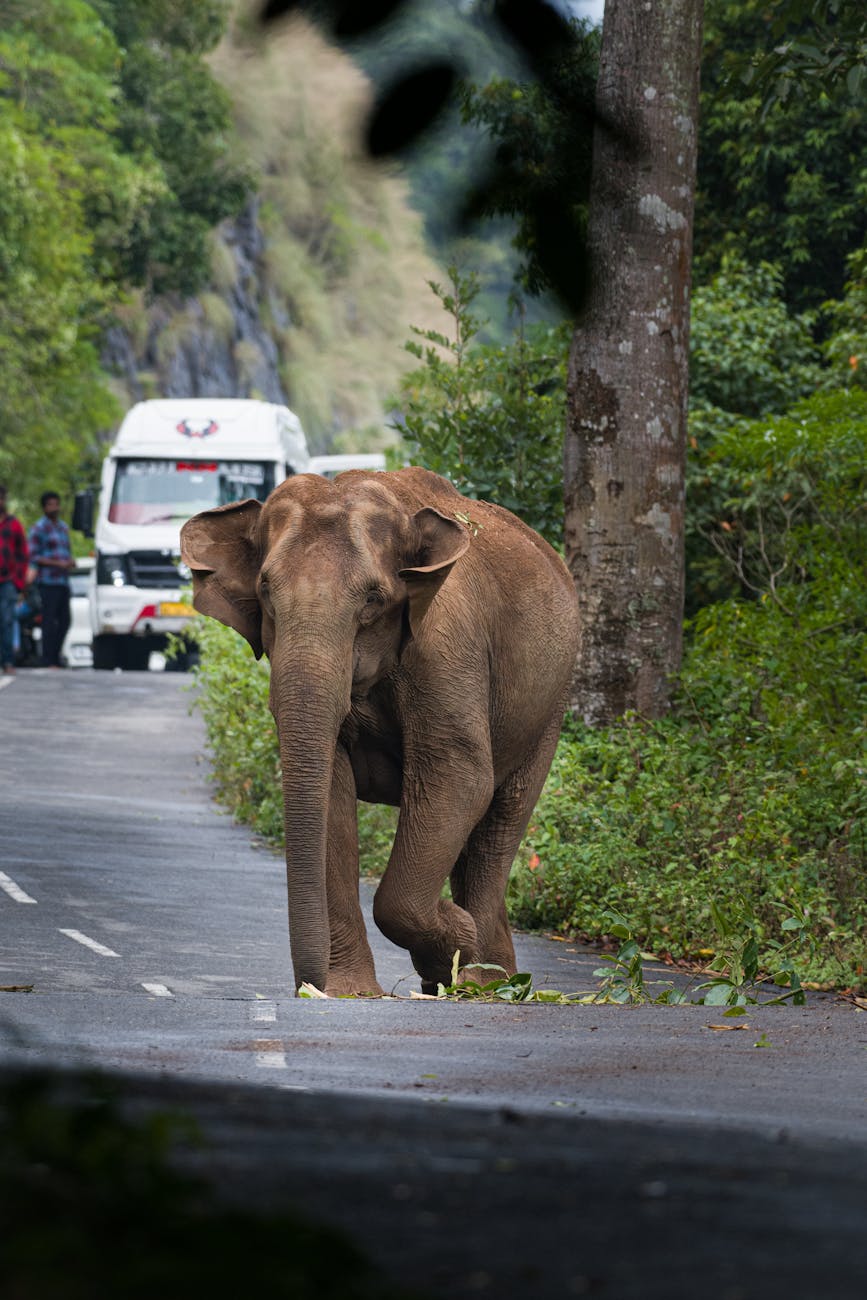
Court says States cannot block traditional elephant routes, stressing the need for coordinated conservation as herds cross State and international borders
India’s Supreme Court has directed the Union government to conduct a nationwide survey of elephant corridors and identify measures needed to keep traditional routes used by wild elephants free from obstruction.
The Court’s intervention comes amid growing pressure on elephant habitats from infrastructure, agriculture, mining and expanding human settlements. It stressed that elephant corridors cannot be treated as State-specific areas because herds routinely cross administrative and international boundaries in search of food, water and suitable habitat.
The order was passed in Prerna Singh Bindra and Others vs Union of India and Others, a case concerning the protection of elephant corridors and measures to address human-elephant conflict.
The Court highlighted the need for coordinated action between the Union government and State authorities, noting that elephants do not recognise political boundaries. It cited examples of elephants moving from Nepal through West Bengal into Jharkhand, as well as herds travelling from Yamuna Nagar in Haryana towards Uttarakhand and Himachal Pradesh.
The ruling reinforces the principle that protecting elephant corridors requires a landscape-level approach rather than fragmented conservation measures confined to individual States.
150 elephant corridors identified
Elephant corridors are critical habitat links connecting fragmented forest landscapes. They allow elephants to move between feeding, breeding and seasonal habitats, while helping maintain genetic connectivity and reducing encounters with people by providing safer routes away from settlements and cultivated areas.
The Elephant Corridors of India, 2023 report, supported by the Wildlife Institute of India, identified 150 validated elephant corridors across 15 Indian States.
West Bengal has the highest number, with 26 corridors. The national network includes 19 inter-State corridors and six international transboundary corridors connecting India and Nepal.
The Supreme Court’s emphasis on inter-State coordination is significant because disruption at one point in a corridor can affect elephant movement across an entire landscape.
India’s wild elephant population was estimated at 22,446 under the Synchronous All India Population Estimation of Elephants (SAIEE) 2021–25. The animals occur across 33 Elephant Reserves covering about 80,777 sq km in 14 major elephant-range States, alongside the identified corridor network.
The Asian elephant (Elephas maximus) is classified as Endangered on the IUCN Red List, with habitat loss, fragmentation and human-elephant conflict among the major conservation challenges facing the species.
Court targets harmful conflict-management practices
The Supreme Court also called for strict implementation of its earlier directions concerning the treatment of elephants. It reiterated that authorities must remove spikes and desist from using fireballs to drive elephants away.
The Court additionally sought a report on the use of firearms and other coercive measures against elephant herds.
Such practices have long raised concerns among conservationists because attempts to forcibly drive elephants from human-dominated landscapes can injure animals, intensify stress and potentially increase the risk of conflict.
The Asian elephant receives the highest level of legal protection in India as a Schedule I species under the Wildlife (Protection) Act, 1972.
Beyond protected areas
The latest directions also bring renewed attention to the limitations of conservation strategies focused solely on protected areas.
Elephants require large connected landscapes, and many traditional movement routes lie outside protected forests. Roads, railway lines, settlements, agricultural expansion, mining and other infrastructure can fragment these routes, forcing elephants into increasingly crowded human-dominated areas.
India’s Elephant Task Force, established in 2010, had recommended declaring the entire area of Elephant Reserves as Ecologically Sensitive under the Environment (Protection) Act, 1986. The proposal could have brought stronger safeguards to around 46,000 sq km and potentially placed restrictions on activities including mining and certain forms of development.
The task force also proposed 10 elephant landscapes covering approximately 110,000 sq km, with the objective of promoting sustainable land-use planning across broader elephant habitats.
The Supreme Court’s latest order places this landscape-level approach back at the centre of India’s elephant conservation debate.
A cross-border conservation challenge
The nationwide survey could help identify the condition of existing corridors, map emerging barriers and determine where interventions are required to maintain connectivity. It may also provide a basis for coordinating infrastructure planning with wildlife movement across State boundaries.
For conservationists, the significance of the ruling extends beyond India’s legal framework. Elephant populations across South Asia occupy landscapes that frequently span political boundaries, making cooperation between jurisdictions essential for their survival.
By directing the Union government to examine elephant corridors nationwide, the Supreme Court has underscored a fundamental ecological reality: elephants move across landscapes, not administrative boundaries.
Protecting those landscapes will therefore require governments to plan infrastructure, agriculture and development around the ecological needs of a species whose survival increasingly depends on its ability to move safely through a rapidly changing environment.




 PARYAWARAN
Leave a comment