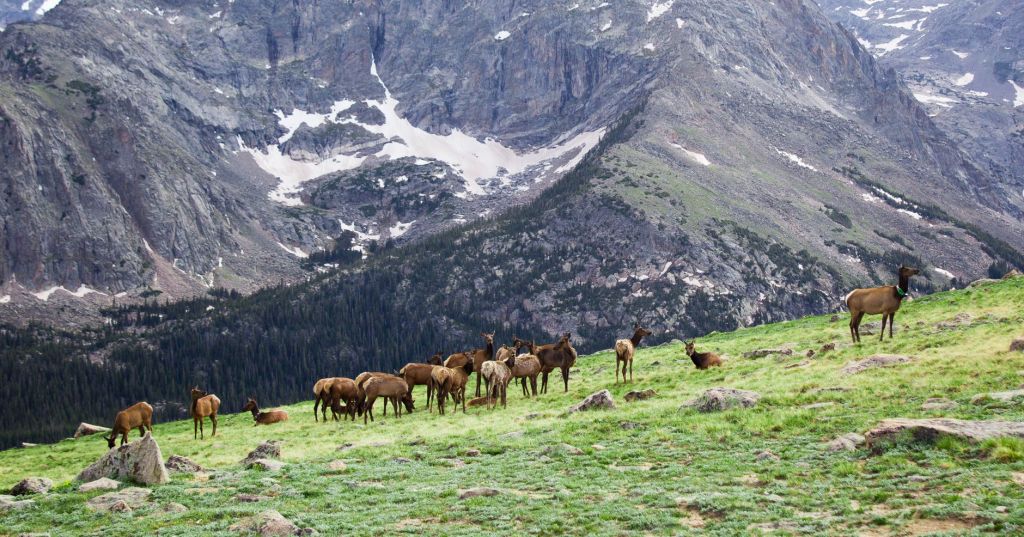
More than a century after elk disappeared from Kentucky, thousands of the animals now roam across the state’s eastern coalfields, where vast stretches of reclaimed strip mines have unexpectedly provided the open grassland habitat they need.
Between 1997 and 2002, Kentucky released 1,541 elk into the eastern counties as part of an ambitious wildlife restoration programme. The population has since grown to roughly 13,000 animals, making it the largest wild elk herd east of the Rocky Mountains.
The recovery is one of the more unusual examples of wildlife restoration in the United States because the landscape supporting the herd was not created by natural ecological recovery. Instead, it emerged from decades of surface coal mining that dramatically altered the Appalachian terrain.
From extinction to restoration
Elk once ranged widely across the Appalachian region. Kentucky’s native eastern elk population, however, was eliminated by hunting and habitat changes by the mid-19th century. The eastern elk subspecies subsequently disappeared entirely.
For more than a century, elk remained absent from Kentucky. Meanwhile, the state’s eastern mountains underwent significant ecological change. Abandoned agricultural areas gradually reverted to forest, while much of the Appalachian landscape became increasingly dominated by dense woodland.
That presented a challenge for any potential elk restoration.
Elk are adaptable animals, but they depend heavily on grasses, herbs and other vegetation found in open landscapes. The dense forests that came to dominate much of the eastern United States were considerably less suitable for sustaining large populations of grazing animals.
Surface coal mining eventually transformed that equation.
Mining created an unexpected landscape
Mountaintop and surface mining operations dramatically reshaped large areas of eastern Kentucky. Mountainsides and ridges were excavated to reach coal seams, while enormous quantities of rock and soil were moved and redistributed.
Following mining, reclamation requirements called for disturbed land to be stabilized and revegetated. Large areas were therefore planted with grasses and other vegetation capable of establishing quickly on disturbed ground.
By the 1990s, extensive reclaimed mine lands had developed into broad expanses of open habitat across the southeastern coalfields.
To wildlife biologists assessing the region, these landscapes represented an unusual opportunity. The reclaimed areas provided abundant forage, while nearby forests offered cover and shelter. The combination created conditions that could potentially support a large population of elk.
A feasibility assessment conducted in 1997 concluded that the region could sustain the species. This paved the way for one of the largest elk restoration efforts undertaken in the eastern United States.
More than 1,500 elk released
Rather than establishing the population gradually with a small number of animals, Kentucky undertook a large-scale translocation programme.
Between December 1997 and 2002, elk were captured in several western and northern states, including Kansas, Arizona, New Mexico, North Dakota, Oregon and Utah. The animals were tested for disease before being transported to Kentucky.
A total of 1,541 elk were released across a 16-county restoration area covering more than four million acres.
The animals quickly adapted to their new surroundings.
The reclaimed mine lands offered extensive forage, while surrounding forests provided protection and suitable areas for calving. Kentucky’s relatively mild winters also presented fewer challenges than the harsher conditions faced by elk in parts of the Rocky Mountains.
The absence of major natural predators such as wolves and grizzly bears further reduced pressures on the growing herd.
A conservation success with an economic impact
The elk population expanded far beyond the original expectations of the restoration programme. It eventually surpassed the initial target of 10,000 animals and has now reached approximately 13,000.
The success has also generated an important economic dimension for eastern Kentucky.
Elk hunting began in the region while the restoration programme was still underway. Annual hunting permits are now highly sought after, with tens of thousands of applications competing for a limited number of tags.
Hunters travel from across the United States to participate, supporting local guides, accommodation providers, restaurants and other businesses.
The elk herd has therefore become an economic asset for communities that have experienced major changes following the decline of the coal industry.
Kentucky’s restored population has also become a source for further elk restoration efforts elsewhere. Animals from the herd have contributed to reintroduction programmes in states including Wisconsin, Virginia and Missouri, extending the impact of Kentucky’s original restoration effort.
A complicated ecological legacy
Despite the remarkable recovery, the story does not mean that surface mining restored Appalachia’s original ecosystem.
Reclaimed mine lands can differ substantially from the forests and soils that existed before mining. Compacted ground, altered topography and non-native vegetation can create ecological conditions very different from those of the original Appalachian forests.
The grasslands that benefit elk are therefore better understood as a product of landscape transformation than ecological restoration.
In this case, an animal that requires open habitat benefited from a landscape that had been dramatically altered by industrial activity.
The long-term future of the herd also requires continued management. Elk can cause crop and garden damage along the edges of their range and are vulnerable to vehicle collisions. Wildlife managers must also monitor disease and maintain suitable habitat.
As reclaimed grasslands naturally become overgrown with shrubs and trees, maintaining open areas may require mowing, prescribed burning and other habitat-management techniques.
An accidental landscape turned conservation asset
Kentucky’s elk story illustrates the complicated relationship between human land use and wildlife conservation.
The coal industry transformed the Appalachian landscape on an enormous scale, leaving behind environmental scars that remain controversial. Yet some of the resulting open areas eventually provided habitat for a species that had been absent from the region for more than a century.
The animals now grazing across the coalfields are not the extinct eastern elk but western elk introduced through deliberate restoration.
Their success demonstrates the remarkable adaptability of wildlife and the importance of recognizing unexpected conservation opportunities within heavily modified landscapes.
In eastern Kentucky, former mining areas have become a stronghold for one of North America’s largest land mammals. The irony is difficult to miss – land that was once reshaped to extract coal now supports thousands of elk because the transformation created something the animals needed most — extensive open grassland.


 PARYAWARAN
Leave a comment